Van Morrison Quotes
These days politics, religion, media seem to get all mixed up. Television became the new religion a long time back and the media has taken over.
Morrison, Van. Interview with David Sinclair. The Telegraph, Telegraph Media Group, 28 Sept. 2012.


Ronald Reagan’s media expert, Michael Deaver, developed a new approach to Presidential appearances. He realized that if the President made a 5 or 10 minute speech at an event, the Evening News would choose one or two 10-15 second excerpts, and that was what the vast majority of the country would see. Therefore, he reasoned, the words spoken meant relatively little. It was the image what would last in people’s memory. Therefore, he worked hard to concentrate on getting the right background for the President’s appearance. The Statue of Liberty, a naval ship, a factory at work. The set of images that people would have of the President in these different appearances would define the President in the minds of most people. Deaver would be more concerned that the TV camera’s showed the background scene he had planned (rather than a strange angle or just a close-up of the President’s face) than he would be about which words—sound bytes—the TV station would select. Hence Baker’s observation that words were less important than the TV images.


Given the early year, with television available in only New York and large cities and hardly any viewers, it is fascinating that White could see the importance of the new medium. Masters of old media tend to underestimate the power and advantage of new media.
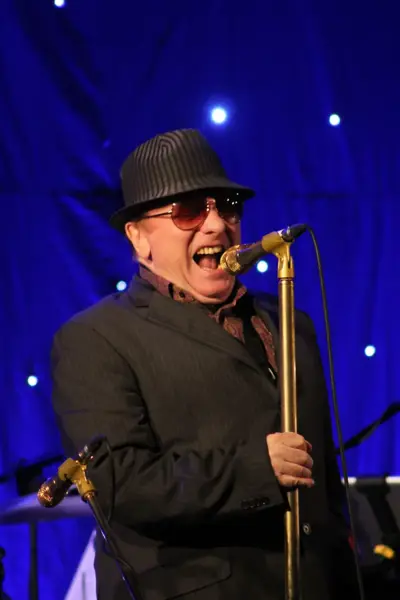
Sir George Ivan Morrison OBE is a Northern Irish singer-songwriter, instrumentalist and record producer. His professional career began as a teenager in the late 1950s, playing a variety of instruments including guitar, harmonica, keyboards and saxophone for various Irish showbands, covering the popular hits of that time. Known as "Van the Man" to his fans, he rose to prominence in the mid-1960s as the lead singer of the Northern Irish R&B and rock band, Them, with whom he recorded the garage band classic "Gloria". His solo career began in 1967, under the pop-hit orientated guidance of Bert Berns with the release of the hit single "Brown Eyed Girl". After Berns's death, Warner Bros. Records bought out his contract and allowed him three sessions to record Astral Weeks (1968). Though this album eventually garnered praise, it was initially a poor seller.
