United States Quotes
There shall be neither slavery nor involuntary servitude in the said territory … any person escaping into the same, from whom labor or service is lawfully claimed in any one of the original States, such fugitive may be lawfully reclaimed, and conveyed to the person claiming his or her labor or service as aforesaid.
This was one of the first opportunities that Congress had to legislate on the slavery issue. The Southerners were adamantly opposed to this article although by previous agreement the issue of slavery in the original 13 states could not be interfered with. Majority sentiment of the nation at the time was opposed to extending slavery into the territories. The second part of the quotation shows however, that the slavery in the Southern States would not be undermined by allowing fugitive slaves to escape into the territories, so there was a compromise of sorts that pushed the inevitable clash over slavery off. Compromise and struggle ensued for 70 years until it finally erupted as the Civil War.
United States, Northwest Ordinance, Article VI, July 13, 1787
Sourced by: Eigen's Political and Historical Quotations

This quotation illustrates the strong abolitionist tendency in the Ohio Territory. Under this clause, escaped slaves from Southern states would not be returned by the state authorities. Even more insulting to the slave enthusiasts of the South, if a Southerner brought any slaves into Ohio with them as was common for Southerners traveling with their personal slaves or horse team drivers, those slaves would be free. An interesting aspect of this clause of the Ohio Constitution was that the beginning was, word for word, copied from the Northwest Ordinance of 1787. See {618100}.

There was little thought of emancipating slaves or their value to the South by the senior officers of the Union Army at the beginning of the war. The Secretary of War however changed that. See {629184}.

This clause was superseded by the 13th Amendment {621373}. More and more abolitionists were refusing on ethical and moral grounds to return fugitive slaves. Some states actually passed laws forbidding the return of fugitive slaves and freeing them the second they set foot in the state. Some objected arguing that the law must be enforced and the Constitution obeyed. They had a point, so the solution was to change the Constitution which is what was done in 1865.


In April, 1784, the Continental Congress passed a series of laws that Jefferson had drafted for the NorthWest territory—Ohio then being the west and the states that would develop there. However, the quotation is the clause that the Southern States blocked and hence did not become law, as the Soothers states cared little about the status of the area regarding slavery, but feared that the new states wold become a sanctuary for runaway slaves. It was another case where Jefferson attempted to end slavery. It also was yet another example of the unwieldiness of the Continental Congress to manage the new nation which led up to the Constitutional Convention of 1787. Ironically, as a price for union, the Southern States demanded and obtained a disproportionate representation in the New House of Representatives by having 60 percent of their slaves counted inzallocating congressional seats. The senate also worked in their favor as there were enough Southern states to block any attack on slavery in the Senate. There was no democratic way to eliminate slavery and the Civil War resulted. However, Jefferson’s proposed law was passed by the last Continental Congress in June, 1787. The difference was that there was also added a proviso that required the return of all runaway slaves from the new territory and states which was lacking in the earlier attempt.

This treaty shows slaves were a major currency of the times and cultures. The Arab Armies of Egypt and the Nubians with this treaty declared an armistice. The extensive Arab use of Black slaves officially begun at this time, has plagued Africa since. Arab slave traders were the middle men who met the European and American demand for slaves until the 19th century. Even at the millennium the Sudanese civil war between the Arab North and Black South has reflected this resentment and hostility and has involved the Northerner’s enslaving tens of thousands of Black Southerners.

In contrast to Massachusetts with had passed a law in 1641 banning slavery (Quote 643567), Maryland 22 years later became to first state to pass a law to formally recognize and allow Negro slavery.

The Chinese laborers were slaves by most definitions of the word as they had been brought to South Africa on a system of indentured servitude. Slavery was illegal so the term had all kinds of political and legal significance. His statement was a masterpiece of admitting that it was almost slavery but leaving some wiggle room so as not to have classified it as such. Some use this as an example of Churchill’s capacity for hypocrisy.

In the first article of its first Constitution Vermont banned slavery and indentured servitude. Delaware had previously done it. See {621427}

He was the last Pope to hold temporal power. This defense of slavery was all the more surprising because America was fighting about the issue in the Civil War and nations like England had abolished slavery. 99 years later Vatican II altered Pius IX’s statement forever. See {612715}.

depending on the term of the sentence Many criminals in England were sentenced to indentured servitude in America for a number of years depending on the crime.

See the Vermont Constitution for another variant of how slavery was abolished: {616994}


In the early days of the Civil War slaves who escaped and reached the Northern lines were routinely returned to their Southern owners as the Fugitive Slave Act required. The first actual emancipation of the Civil war was not the President’s proclamation but was Butler who as a Union General ordered that the slaves escaping from Virginia no longer be returned. He was accused of violating the then existing law, however he had a legal rationale which hoisted Virginia on its own petard.

This is one of the major reasons that Slavery was so hard to end in the South. At the time, the dollar value of the Southern slaves was greater than the value of all the land, factories, inventory, and capital equipment of the South. Slaves were not only capital, they were the largest component of Southern capital and Southern wealth. There were numerous ideas of paying slave owners for the freedom of their slaves, and if this was done, it would have been far less expensive in money alone than the Civil War cost. However, the Southern leadership, like Fitzhugh, were totally intransient with culture and customs—indeed the Southern concept of manhood—was dependent in Slavery. The result was that no compensation was paid to slave owners and the South was impoverished as a result of its capital loss and it would not recover for 150 years.


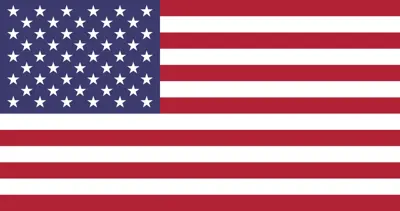
The United States of America (USA), commonly referred to as the United States (U.S.) or America, is a country composed of 50 states, a federal district, five major self-governing territories, and various possessions. The 48 contiguous states and federal district are in central North America between Canada and Mexico, with the state of Alaska in the northwestern part of North America and the state of Hawaii comprising an archipelago in the mid-Pacific. The territories are scattered about the Pacific Ocean and the Caribbean Sea. At 3.8 million square miles (9.8 million km2) and with over 324 million people, the United States is the world's third largest country by total area (and fourth largest by land area) and the third most populous. It is one of the world's most ethnically diverse and multicultural nations, the product of large-scale immigration from many other countries.
