United States Quotes
There shall be between all the territories of the United States and all the territories of the Argentine Confederation a reciprocal freedom of commerce. The citizens of the two countries, respectively, shall have liberty, freely and securely, to come with their ships and cargoes to all places, ports and rivers in the territories of either, to which other foreigners, or the ships or cargoes of any other foreign nation or State, are, or may be, permitted to come; to enter into the same, and to remain and reside In any part thereof, respectively; to hire and occupy houses and warehouses, for the purposes of their residence and commerce; to trade in all kinds of produce, manufactures and merchandise of lawful commerce; and generally to enjoy, in all their business, the most complete protection and security, subject to the general laws and usages of the two countries respectively. In like manner, the respective ships of war, and post-office or passenger packets of the two countries, shall have liberty, freely and securely, to come to all harbors, rivers and places to which other foreign ships of war and packets are, or may be, permitted to come; to enter into the same to anchor and remain there and refit, subject always to the laws and usages of the two countries respectively.
Treaty of Friendship, Commerce and Navigation, Between Argentina and the United States, Article II; July 27, 1853
Sourced by: Eigen's Political and Historical Quotations

This quotation illustrates two important points. First, that foreign and domestic trade and merchants were very much appreciated at the time and an important component of society that there were special protections for traders and merchants. Second, was the national preemption of jurisdiction and control over business and commerce that would enter and leave the city. On most matters the local authorities would handle things, but intercity and international commerce was historically continuously impaired by individual nobles and other authorities making rules affecting merchants who might come to their town or city. The Crown preempted this authority in the 13th century and the “Commerce Clause” of our Constitution was not an unusual concept and had an extensive legal and economic history.


The right of English merchants had been attained earlier when Ivan IV, the Terrible, was Czar. However the Czar35266s were so autocratic that one might or might not live up to agreements made by their predecessors. So Queen Elisabeth's diplomats had to repeatedly negotiate free trade agreements with Russian Czars.

Sealed under duress and later repudiated by the King with Papal assistance. This was one of the most important freedoms that established free trade as a principle—one of the reasons that England became so prosperous." John Lackland

Harris opened up trade with Japan for the United States. The problem at the time had nothing to do with the potential economic effects of trade on domestic industry or balance of payments, but for the Japanese was strictly a cultural problem. They were in great fear of what today some call “cultural imperialism”--the adoption of a foreign culture. The Japanese had been so fearful of cultural influence of foreigners that when some Japanese fishermen’s boat had been sunk and they had been rescued by foreign seamen and returned to Japan, they were executed as they had been “contaminated” and could “contaminate” the rest of the population.

This quotation is interesting as it shows that and the end of the 19th century, although the United States was over 100 years old, we were first beginning to be major world traders. Not that our merchant marine was not yet world class. Another interesting facet of the quote is that the President was claiming that foreign trade was good for the domestic economy. Much of America in its first 100 years supported protectionism for American manufacturers.

This was typical of a free trade agreement of the time. It also provided that Englishmen residing for trade in the Ottoman Empire be free of Ottoman poll and head taxes. The Ottomans had such arrangements with France and Venice—then an independent city. In addition to the trade advantages, the Ottomans were militarily concerned with Spain and the English-Spanish hostility was supported and welcomed by the Ottomans. See Murad’s 1590 letter to Queen Elizabeth.
Ivan the Terrible
He was commenting on the many Western businessmen who lost money in unwise Chinese investments at the end of the 20th Century and the early 21st.


The entire exploration, founding and colonization of New York was a business enterprise right from the start.

On January 29, 1895 the Brass King, Koko, and 1000 warriors attacked the British trading station. The destroyed the harbor and docks and took many employees of the British Niger Company back to Brass as prisoners. The Niger Company had taken over the middleman trade that the Brassmen had previously enjoyed and had other grievances with the company. In a celebration of the victory, most of the company employee prisoners were eaten. See Koko’s later apology.

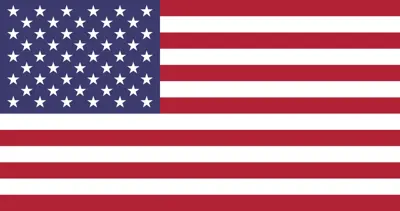
The United States of America (USA), commonly referred to as the United States (U.S.) or America, is a country composed of 50 states, a federal district, five major self-governing territories, and various possessions. The 48 contiguous states and federal district are in central North America between Canada and Mexico, with the state of Alaska in the northwestern part of North America and the state of Hawaii comprising an archipelago in the mid-Pacific. The territories are scattered about the Pacific Ocean and the Caribbean Sea. At 3.8 million square miles (9.8 million km2) and with over 324 million people, the United States is the world's third largest country by total area (and fourth largest by land area) and the third most populous. It is one of the world's most ethnically diverse and multicultural nations, the product of large-scale immigration from many other countries.
