Charles Grey Quotes
There is no-one more determined against annual parliaments, universal suffrage and the ballot, than I. My object is … to put an end to such hopes and projects. The ... principle of my reform is, to prevent the necessity of revolution, ... reforming to preserve and not to overthrow.
2nd Earl Grey
Charles Grey, 1764–1845, British Prime Minister (Whig), Tea Pervayor, 1831
Sourced by: Eigen's Political and Historical Quotations


Hunt gave as an example Mary Smith of Stanmore. This quotation is very interesting in the history of women’s suffrage. Hunt was a strong advocate for Universal Suffrage (See {616653}.) At the time, even men had to be a taxpayer and own a sufficient amount of property to vote. Less than 20% of the population of Britain were allowed to vote. The argument at the time was that the husband would represent the family’s interest at the ballot box and there was no need for women to vote. But by facing parliament with the logical inconsistency of its position, he was able to make his point, although there were very few women like Mary Smith who were single and had the economic resources to qualify. Most widows remarried so even if they had economic resources, there was a man who could assume the then perceived role of head of the household.


At the time, the House of Lords which was made up of aristocrats who inherited their titles and the Lords could undo any legislation that was passed by the House of Commons. This gave the aristocrats of England a veto on all legislation.


1st Baron Macaulay. Macaulay was opposed to universal suffrage, and when John Stuart Mill and others started a movement for allowing all males to vote, this was one of the tactics to stave off allowing the lower classes to vote.

He was stating the major objections that were given by many of the royalty and the upper class who opposed universal suffrage. Milton however supported the right of all men to vote. See {632509}. Even in the 21st century, there are right wingers who oppose universal suffrage on the grounds that the lower classes vote only concerned by what they materially will obtain, as if many people of all classes do not do that and that all poor do. For additional reasons see {632533}.


RSD Party platform. The Russian Social Democratic Party was in 1887 a very modern democratic party inside the feudalism of Tsarist Russia. The Tsar and the nobility thought them wild radicals and yet their party platform was not only reasonable, but in large part influenced by the American Constitution, Bill of Rights, and then current practices in America. It is hard to believe but at the time a Russian could not work at an occupation he chose but could only do the work that was permitted by the aristocrat who owned the land he lived on. The Tsar, Alexander III, was a terrible autocrat, unlike his father who had desired some reform and abolished serfdom. All efforts at any kind of Democratic reform were put down, and Russian reformers in this party tended to split between those who still hoped for reform and those who saw violent revolution as the only hope. By 1906 the party which had no success at any of their planks of reform had split into two main subgroups—the Mensheviks and the Bolsheviks—both active revolutionary groups, but the Mensheviks tended to be more democratic and moderate and wanted to include the workers and the middle class whereas the Bolsheviks saw the middle class as part of the problem and argued for a more radical political structure. The real split occurred after the 1917 revolution when the Mensheviks lost popularity among the Russian revolutionists as not being radical or realistic enough in what it would take to transform Russia. The Bolsheviks gained control and by 1921, they had outlawed and purged the Menshevik party. That was the last hope of democracy in Russia, as the Bolsheviks model was that which guided the country until the fall of the Soviet Union.
He was stating the major objections that were given by many of the royalty and the upper class who opposed universal suffrage. For additional reasons see {632532}. Milton however supported the right of all men to vote. See {632509}.

In Rhode Island only land owners could vote. When most Americans were farmers and owned land, this was not an anti-democratic requirement, but Rhode Island developed very rapidly with the Industrial Revolution and the shipping and fishing industries. In 1841 60 percent of the adult males in Rhode Island could NOT vote. The non voters tended to be Catholic Immigrants and Black skilled freemen. Thomas Wilson Dorr of an old RI family called a “People’s Convention” which voted a “New Constitution eliminating the land ownership requirement. The regular government saw this as a rebellion and the Governor ordered the State Militia to take Dorr and his followers into custody. However, most of the militia were Catholics and they refused, Governor King asked President Tyler for Federal troops and was refused. Finally the “rebellion” fell apart and Dorr was captured and sent to prison for life. But the regular legislature having gotten the message, within a year passed a new constitution which gave all free males—white and black—the right to vote. Dorr was released from prison and a few years later was pardoned and returned his civil rights. Thus ended what is sometimes called Dorr’s Rebellion.

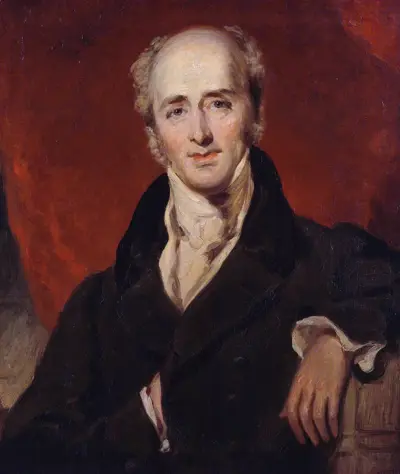
Charles Grey, 2nd Earl Grey, known as Viscount Howick between 1806 and 1807, was Prime Minister of the United Kingdom of Great Britain and Ireland from 22 November 1830 to 16 July 1834. A member of the Whig Party, he backed significant reform of the British government and was among the primary architects of the Reform Act 1832. His government also saw the abolition of slavery in the British Empire. In addition to his political achievements, he has come to be associated with Earl Grey tea.
