Clarence Darrow Quotes
There is no other bargaining but collective bargaining.
Clarence Darrow, 1857-1937, Attorney and author, Quoted by Dinnis Speech, Iowa Federation of Labor, AFL_CIO, February 17, 2003
Sourced by: Eigen's Political and Historical Quotations


At the time, most company owners and managers refused to bargain collectively with employee elected organizations. Hoover was then an exceptionally modern business person who realized the importance of good working relations between management and labor and advocated collective bargaining. However, as he got deeper into partisan politics, he backed off urging this. Nationally, in the 1960s collective bargaining had become an instrument of basic sound management, but more and more managements returned to simply refusing to bargain with employee organizations and instead strengthened their managers and supervisors and adopted (by choice and by government regulation) more and more modern, healthy, safe, efficient and attractive working conditions and policies. By the 21st century, labor unions and employee organizations had lost their attractiveness while managers were more attentive to workers and there were very few private companies engaged in collective bargaining.


In 1892 President Harrison and the Republicans were trying to win a second term and were embarrassed by a bloody strike and riot at the Homestead steel works. Frick, the Homestead General Manager, was visited by a Republican emissary suggesting that Frick recognize the union and reduce the public embarrassment.. The Republicans lost to Grover Cleveland and the Democrats.


This quotation was reprinted and widely distributed by the CIO in its 1936 organizing drive of the Ford Motor Company


The act gave unions rights of organization which they had not had before in America, but few critics ever characterized it in the over the top rhetoric which was characteristic of Nixon in his early political years.


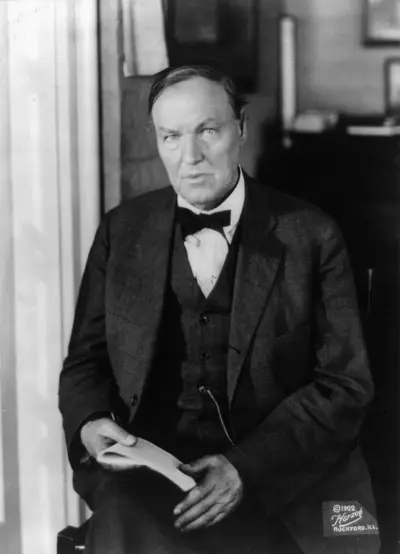
Clarence Seward Darrow was an American lawyer who became famous in the early 20th century for his involvement in the Leopold and Loeb murder trial and the Scopes "Monkey" Trial. He was a leading member of the American Civil Liberties Union, and a prominent advocate for Georgist economic reform.
