HENRY CLAY FRICK
In 1904, candidate Theodore Roosevelt solicited campaign funds from leading businessmen. After he was elected, he was viewed to have "turned" on them since he attempted to curtail monopolistic excess, instituted regulation, and made other business reforms. This is the original remark, but another, more sanitized version appeared in New York Times and other places as: “We bought him and he did not stay bought.”
In 1892 President Harrison and the Republicans were trying to win a second term and were embarrassed by a bloody strike and riot at the Homestead steel works. Frick, the Homestead General Manager, was visited by a Republican emissary suggesting that Frick recognize the union and reduce the public embarrassment.. The Republicans lost to Grover Cleveland and the Democrats.
Frick survived and continued his policies.
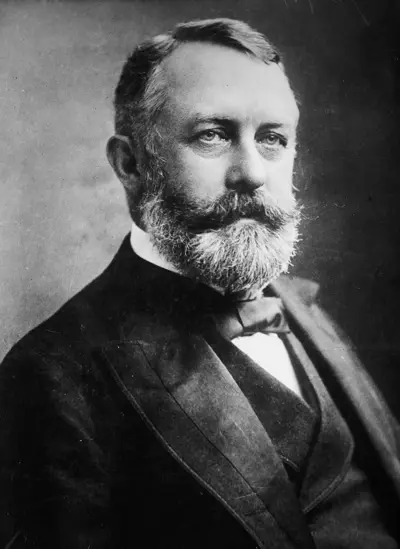
Henry Clay Frick was an American industrialist, financier, union-buster, and art patron. He founded the H. C. Frick & Company coke manufacturing company, was chairman of the Carnegie Steel Company, and played a major role in the formation of the giant U.S. Steel manufacturing concern. He also financed the construction of the Pennsylvania Railroad and the Reading Company, and had extensive real estate holdings in Pittsburgh and throughout the state of Pennsylvania. He later built the historic neoclassical Frick Mansion (now a landmark building in Manhattan), and upon his death donated his extensive collection of old master paintings and fine furniture to create the celebrated Frick Collection and art museum. However, as a founding member of the South Fork Fishing and Hunting Club, he was also in large part responsible for the alterations to the South Fork Dam that caused its failure, leading to the catastrophic Johnstown Flood. His vehement opposition to unions also caused violent conflict, most notably in the Homestead Strike.
