Anselm of Canterbury Quotes
There is no inconsistency in God's commanding us not to take upon ourselves what belongs to Him alone. For to execute vengeance belongs to none but Him who is Lord of all; for when the powers of the world rightly accomplish this end, God himself does it who appointed them for the purpose.
Anselm. Cur Deus Homo. Translated by Sidney Norton Deane, Open Court Publishing Company, 1903, p. 202.


This is one of the passages of the Bible that Christian Kings cited in expecting obedience. Most of the monarchs took this passage to mean that God had selected and appointed them to rule.

In contemporary American terms this notion is usually couched in terms of all consumers paying higher prices because of credit card frauds, or all airline travelers must submit to searches because of the terrorists.

This is a very interesting quotation in that it began as a bogus quotation. Someone made it up and posted it on the internet. Soon it had been picked up by many of the Internet quotation sites which just “scrape” other sites and do no research themselves. Soon it was all over the internet. When he appeared on Meet the Press, Tim Russert asked him about the attribution. He then embraced the quotation as representing his real feelings. In the area of the Internet, this phenomenon has been possible and in this case actually happened.

Manava Dharma Shastra. This text is a part of the Hindu Holy Texts. Hindus believe that Manu was a prophet whose text is revealed or inspired.


The Confession was a statement of doctrine to which the Swiss Anabaptists adopted.


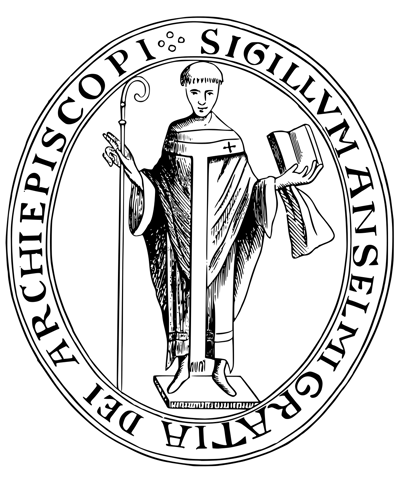
Anselm of Canterbury (/ˈænsɛlm/; 1033/4–1109), also called Anselm of Aosta (Italian: Anselmo d'Aosta) after his birthplace and Anselm of Bec (French: Anselme du Bec) after his monastery, was an Italian Benedictine monk, abbot, philosopher and theologian of the Catholic Church, who held the office of Archbishop of Canterbury from 1093 to 1109. After his death, he was canonized as a saint; his feast day is 21 April.
