Rufus King Quotes
This is the law of God by which He makes His way known to man and is paramount to all human control.
King, Rufus. The Life and Correspondence of Rufus King. Edited by Charles R. King, vol. 6, G. P. Putnam's Sons, 1900, p. 699.


Hizb ut-Tahrir is a “worldwide Islamic political party.” It is banned as a terrorist, violence provoking institution in most of the Muslim countries and many nations in Europe.


Niemoller, a World War I U-boat commander and clergyman, was jailed for rejecting the National Socialist ideology and for appealing to German Christians not to embrace the new paganism of Nazism and Fascism.


This verse has been one of the bases of Muslim theocratic states like Iran’s claim to legitimacy.

See Matthew Hale for a concurring view and Thomas Jefferson for a contrasting one.


In 1996 the Tennessee Senate passed a resolution to post the Ten Commandments in homes, schools and businesses. Cohen was then a Senator of the Tennessee State Legislature.


Joseph ben Matthias. There a different kinds of theocracy, There can be a Pope, a King, or a Supreme Leader who acts as the chief magistrate using a religious tract as the law of the land. The Ancient Jews had a Republican Theocracy were the leaders were chosen by the people but they did not promulgate any laws. The Torah—the first 5 books of the Old Testament—was the law of the land. In comparison. 21st century Iran recognized the Koran as the source of Laws. However, their chief magistrate was a cleric—the supreme leader who is not elected but appointed by a few other clerics. None of the other Iranian leaders are chosen by the people because all candidates must be approved by the Supreme Leader in order to even stand for election. So the ancient Jews had a republican theocracy, while Iran was an autocratic theocracy.


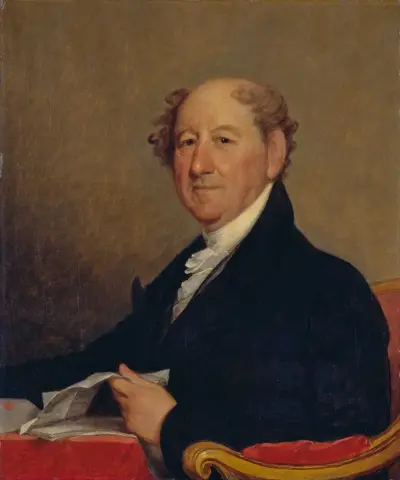
Rufus King was an American lawyer, politician, and diplomat. He was a delegate for Massachusetts to the Continental Congress and the Philadelphia Convention and was one of the signers of the United States Constitution in 1787. After formation of the new Congress he represented New York in the United States Senate. He emerged as a leading member of the Federalist Party, serving as the party's last presidential nominee in the 1816 presidential election.
