Cornelius Vanderbilt Quotes
There is no friendship in trade.
Croffut, William A. The Vanderbilts and the Story of Their Fortune. Belford, Clarke & Company, 1886, p. 142.


He was contrasting the English efforts in the New World and the French. New France was the term for the early French North American areas much of which was in Canada. This classic view argues for the superiority of a capitalistic and individualistic development model over a planned one organized from the top down,

His father Cornelius, one of the great, creative industrialists of America, was not at all of the same mindset and saw corporations and the Railroads as having an important role in America with substantial obligations to the society which enabled the economic development and supported the railroads. He described his son as a “blockhead”. William goes down in American history as the arrogant industrialist and capitalist whose wealth was produced by his talent of being born to the right father who built the great empire.


See Conrad Black {622808} for a real life version of this idea.

See Oliver Stone {625339} for a modern, popular culture, icon of this idea. Several years after this interview, Black, with business interests in several countries, was convicted and served a jail sentence in the United States for fraud. His greed got the best of him.


Like many ideological political philosophers who developed a following, she tended to exaggerate many of her points and to ignore additional factors. While individual businessmen and politicians pursuing their self interests were certainly necessary for America’s great growth and success, they were not sufficient. Many of the founding fathers sacrificed their fortunes and in some cases their lives to gain American independence. And the sacrifice of millions was necessary in many conflicts were those who fought were rarely enlarging their own fortunes. And equally important factors of American success were the collective action of communities creating schools, roads, bridges, canals. The driver of the businessmen to move into critical areas was the government subsidizing the railroads, proving the telegraph useful, developing the national highway system and the Internet. Most of the great universities and research centers were created as government, charitable or religious institutions where personal profit was not a factor. It is that combination of private and public, self serving and communitarian drives, secular and religious that have created modern America. Many people in Rand’s ere did not credit the private, self serving contributions of many great men, and Rand led the movement to remind all of that critical factor. In the process of making her good point, she tended to ignore the other factors.

One of the contradictions of capitalism is that at many points in history capitalism has caused and/or contributed to great death and suffering. However, that same capitalism has led to the development of science, technology, agronomy, medicine and education which has saved and preserved millions of lives and raised the standard of living more than anything else.


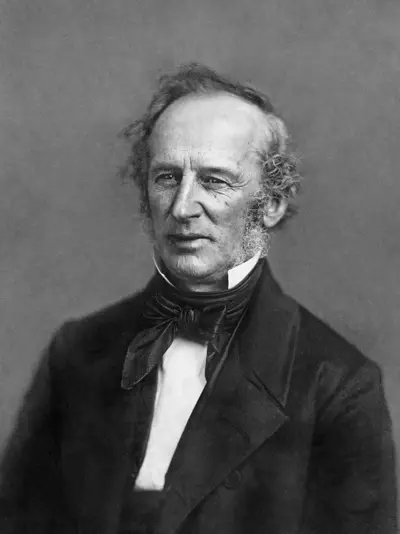
Cornelius Vanderbilt was an American business magnate who built his wealth in railroads and shipping. After working with his father's business, Vanderbilt worked his way into leadership positions in the inland water trade and invested in the rapidly growing railroad industry. Nicknamed "The Commodore", he is known for owning the New York Central Railroad. His biographer T. J. Stiles says, "He vastly improved and expanded the nation's transportation infrastructure, contributing to a transformation of the very geography of the United States. He embraced new technologies and new forms of business organization, and used them to compete....He helped to create the corporate economy that would define the United States into the 21st century."
