William Henry Vanderbilt Quotes
The public be damned. What does the public care for railroads except to get as much out of them for as small a consideration as possible? I don't take any stock in this silly nonsense about working for anybody's good but our own, because we are not. When we make a move, we do it because it is in our interest to do so, and not because we expect to do somebody else good.
His father Cornelius, one of the great, creative industrialists of America, was not at all of the same mindset and saw corporations and the Railroads as having an important role in America with substantial obligations to the society which enabled the economic development and supported the railroads. He described his son as a “blockhead”. William goes down in American history as the arrogant industrialist and capitalist whose wealth was produced by his talent of being born to the right father who built the great empire.
William Henry Vanderbilt, 1821–1885, Railroad Owner & Executive, Heir of the Great Industrialist Cornelius Vanderbilt, Quoted in Clarence P. Dresser, "Vanderbilt in the West", New York Times, October 9. 1882
Sourced by: Eigen's Political and Historical Quotations

His father Cornelius, one of the great, creative industrialists of America, was not at all of the same mindset and saw corporations and the Railroads as having an important role in America with substantial obligations to the society which enabled the economic development and supported the railroads. He described his son as a “blockhead”. William goes down in American history as the arrogant industrialist and capitalist whose wealth was produced by his talent of being born to the right father who built the great empire.

At the time, there was generally only a single newspaper in an area in New Zealand.


Samuel Langhorne Clemens, 1835-1910. The nature of telephone technology made it easy for companies to obtain monopolies for different areas of the country. When there is a monopoly, there is a huge tendency for the controlling company to charge very high prices and have poor customer service as the usual competition required for quality performance under capitalism is nonexistant. So in 1890, there was the same resentment of the telephone companies, that existed over a century later when there was still a monopoly. Regulation helped somewhat, but the capabilities of the monopolist began to include lobbying and campaign contributions so that typically, in the 21st century, the local telephone companies had much control over the State Commissions that were supposed to regulate them. Long distance service, whose monopoly was broken up by the Federal Courts became a wonderful service for customers and the prices were a tiny fraction of what they had been under their old monopoly.


President Theodore Roosevelt referred to the same groups similarly. See {638453} and {639956}.


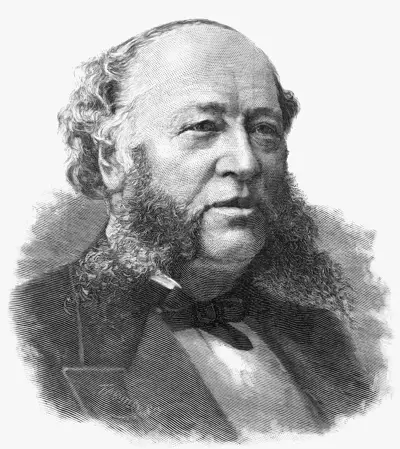
William Henry "Billy" Vanderbilt was an American businessman and philanthropist. He was the eldest son of Commodore Cornelius Vanderbilt, an heir to his fortune and a prominent member of the Vanderbilt family. Vanderbilt became the richest American after he took over his father's fortune in 1877 until his own death in 1885, passing on a substantial part of the fortune to his wife and children, particularly to his sons Cornelius II and William. He inherited nearly $100 million from his father. The fortune had doubled when he died less than nine years later.
