Algernon Sidney Quotes
There is a rich and haughty King who is blessed with such neighbours as are not likely to disturb him and has nothing to fear from his miserable subjects; but the whole body of that state is full of boils and wounds and putrid sores. There is no real strength in it. The people are so unwilling to serve him that he is said to have put to death above fourscore thousand of his own soldiers within the space of fifteen years for flying from their colours, and if he were vigorously attacked, little help could be expected from a discontented nobility or a starving and despairing people.
Algernon Sidney, 1622-1683, British Republican & Member of Parliament, Argument that France’s apparent prosperity and peace were illusionary, Discourses on Government
Sourced by: Eigen's Political and Historical Quotations


1st Earl of Beaconsfield


China, after overthrowing the Manchu Dynasty was struggling among many factions for control of the government.

Manava Dharma Shastra. This text is a part of the Hindu Holy Texts. Hindus believe that Manu was a prophet whose text is revealed or inspired.


the Dutch monarchy supported by England The French fear of course was that the revolutionary fervor spreading to the bourgeois could easily spread to France, and that is exactly what happened 4 years later. See {639769} for more of his view on the Dutch revolutionary spirit that might infect France.

Napoleon had been a great supporter of Napoleon, but had become disillusioned.


The revolution turned on many of its initiators including Vergniaud. He was guillotined along with other Girondists.


The editor had discovered that she and her husband had had an affair before they were married and she was still married to another man. This would have ruined her husband’s political career and she decided to prevent that by killing the editor with the information. She was tried for murder and acquitted on the grounds that this was not a rationally premeditated murder but the uncontrollable emotional reaction of a woman who was so weak that she had no control over her actions. This was the excuse that the jury needed, as the personal slandering of politicians for things unrelated to their political activity was becoming very unpopular. This affair was the beginning of the tendency of the French media to not write about the personal and sexual activities of politicians which became a strong cultural tradition.
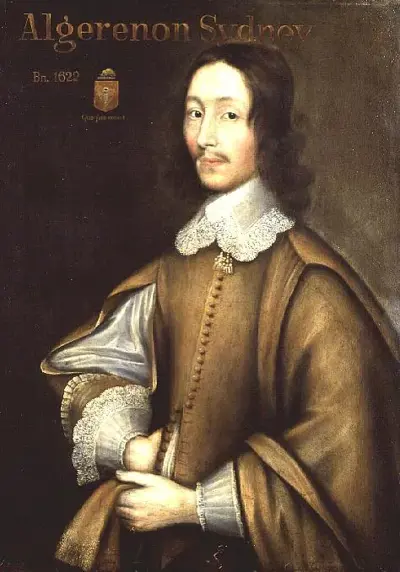
Algernon Sidney or Sydney was an English politician and member of the middle part of the Long Parliament. A republican political theorist, colonel, and commissioner of the trial of King Charles I of England, he opposed the king's execution. Sidney was later charged with plotting against Charles II, in part based on his most famous work, Discourses Concerning Government, which was used by the prosecution as a witness at his trial. He was executed for treason. After his death, Sidney was revered as a "Whig patriot–hero and martyr".
