Charles Sumner Quotes
The wise fathers did not treat the country as a Chinese foot, never to grow after infancy; but, anticipating Progress, they declared expressly that their great Act is not final. According to the Constitution itself, there is not one of its existing provisions — not even that with regard to fugitives from labor — which may not at all times be reached by amendment, and thus be drawn into debate. This is rational and just. Sir, nothing from man's hands, nor law, nor constitution, can be final. Truth alone is final.
The Chinese had a custom of binding the feet of female young children so that they would never grow large. Small feet were considered beautiful. However, the woman was almost crippled by the process and could barely walk.
Charles Sumner, 1811-1874, U. S. Senator (Democrat, Free Soiler and Republican, MA), "Freedom National, Slavery Sectional," Senate Speech, July 27, 1852
Sourced by: Eigen's Political and Historical Quotations

This quotation is an excellent statement of the argument of interpreting a constitution—in this case Wisconsin’s—in light of modernity or to only interpreted consistent with the original intent and mindset.


The quotation he gives from the first Chief Justice is from McCulloch v. Maryland, 1819. The issue is one that has divided jurists and politicians ever since the Constitution was ratified was should it be interpreted literally giving credence only to that which the framers specifically intended or as Hughes, Marshall and most modern interpreters believe that the principles should be interpreted in the light of the times. The Founding Fathers never envisaged an Internet or a potential enemy who could kill millions of Americans without sending large contingents of soldiers to our shores.


The Grammar Curmudgeon. This is one side of a fundamental argument within America as to the Constitution. The other side argues that the original intent of the Founding Fathers should prevail. That their principles are what has made America great, and we do not want to deviate from those. In determining Constitutionality, it is the original intent that should prevail even if the issues are ones of which the founding fathers had no inkling such as the ability of a nuclear power to destroy much of the nation before Congress could be called into session or that police could use geo-positioning devices to track the movement of citizens. Or that women could prove themselves the equal of (or superior to) in intellectual pursuits and would want to participate in politics and policy making.


The Chief Justice at the time was an ultra-conservative judge, who together with his 8 colleagues—all conservative—had blocked much of the democratic and progressive legislation that the Congress had passed. FDR had a much different legal and philosophical view of the Constitution than the Chief Justice, and the court would declare much of his New Deal legislation, passed in the emergency of the Great Depression, unconstitutional. Almost all of those “unconstitutional” things were years later passed again and this time a more modern court found they were Constitutional.


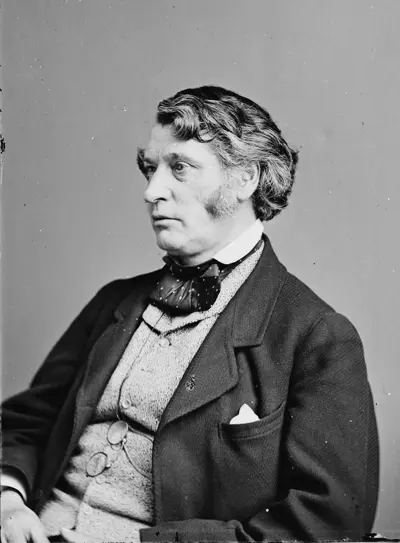
Charles Sumner was an American statesman and United States Senator from Massachusetts. As an academic lawyer and a powerful orator, Sumner was the leader of the anti-slavery forces in the state and a leader of the Radical Republicans in the U.S. Senate during the American Civil War. During Reconstruction, he fought to minimize the power of the ex-Confederates and guarantee equal rights to the freedmen. He fell into a dispute with President Ulysses Grant, a fellow Republican, over the control of Santo Domingo leading to the stripping of his power in the Senate and his subsequent effort to defeat Grant's re-election.
