Walt Whitman Quotes
The vast area of the second story of that noblest of Washington buildings, the Patent Office, is crowded close with rows of sick, badly wounded and dying soldiers. They are placed in three very large apartments. I have gone there many times. It is strange, solemn, and with all its features of suffering and death.
The Patent Office was one of the most imposing buildings in Civil War Washington. There was truly a society at war where every resource was put to us for the war effort. Walt Whitman, in addition to being a great poet, was a nurse.
Walt Whitman, 1819-1902, Poet & Journalist, January 1863
Sourced by: Eigen's Political and Historical Quotations


Despite the horrors and war crimes of Andersonville Prison, there were many instances of both sides of the Civil War assisting the enemy when wounded. Also, the primitive facilities for caring for the wounded, who would sometimes lay on a battlefield for 2-5 days before anyone got around to assisting them if they were still alive. Walt Whitman, in addition to being a great poet, was a nurse.


Professional military men such as Morgan traveled to France to observe and learn from an existing limited war.


Lincoln was depressed when the Union had over 30,000 casualties in a two-week time.


Milosevic was explaining the events that led to civil war in Yugoslavia

Sherman had friends in the South and he saw rebellion and war coming. Most Southerners had a romanticized view of war and were so wrapped up in trying to preserve their economic and cultural way of life that they did not think through the implications of such a war. After and during the war, he was particularly angry with the Southerners who had brought such terrible casualties and destruction upon the land and its people.


The description was of the battle field at Bull Run. The Times even then was very candid. The public was shocked and some thought it unpatriotic to print this.


This may have been the origin of the famous Stalin later quotation of very similar sentiment {616657}. No one is certain if Stalin had ever seen this work. Or he might have come upon it independently. The original source does not mention Massigli by name. However the description of the “Diplomat vom Quai d’Orsay” fits Massigli and his expertise so we attribute it to him. However, he was not the first to express this idea. The Anglican Bishop of London, Beilby Porteus, appears to have been the earliest—See {627489}.


The only soldier ever so honored

Eisenhower was then the Supreme Allied Commander of the Allied Forces.

This is an aspect of the American Revolution that is rarely described in American history books. Rush ran the hospitals for the Revolutionary Army and talked to many officers and enlisted men, and also observed much of the British military practices.


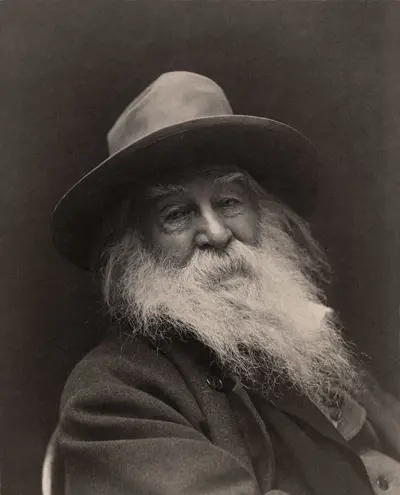
Walter Whitman was an American poet, essayist, and journalist. A humanist, he was a part of the transition between transcendentalism and realism, incorporating both views in his works. Whitman is among the most influential poets in the American canon, often called the father of free verse. His work was controversial in its time, particularly his poetry collection Leaves of Grass, which was described as obscene for its overt sensuality. Whitman's own life came under scrutiny for his presumed homosexuality.
