Empress Dowager Cixi Quotes
The two of us have made our decision and we are in complete agreement. We are now giving you our definitive word, which may not be altered or modified. Listen and obey!
Cixi had been one of the many concubines of the Emperor and she bore a son who was first in the line of succession. The Emperor’s wife, Empress Zhen had no children but was the senior official of the Empire when her husband died. Instead of being rivals, Cixi and Zhen were very close friends so when it had to be decided who was to rule until Cixi’s son became of age, the women agreed that Zhen would see to the education and the training of the child and manage the court, and Cixi would manage the government and the Empire as regents for the child. However, in 1875, the boy died and there was no clear successor. Cixi with Zhen’s approval then issued this edict and in effect seized control of the entire empire of China.
Cixi, 1835–1908, Empress Dowager of China, Written Edict to the Court and Government, 1875
Sourced by: Eigen's Political and Historical Quotations


In 1877 Wasburn was dropped from the List of Ministers by the Unitarian Church. He had become quite atheistic.


In 1902 there was a national crises brought about by a coal strike. At that time the president had no legal powers in such a matter. Lodge urged President Theodore Roosevelt to take a symbolic public stand on the strike issues. He did so, and it led to a successful arbitration of the dispute. It was one of the first examples of presidential "jawboning:"


The chairman of the Public Works Committee doled out committee jobs in his home state. He was asked what these appointees did:
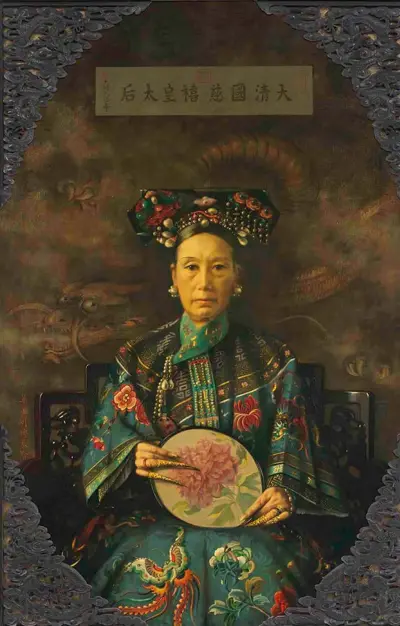
Empress Dowager Cixi was a Chinese empress dowager and regent who was the de facto supreme ruler of China in the late Qing dynasty for 47 years, from 1861 until her death in 1908. Of the Manchu Yehe Nara clan, she was elected as a concubine of the Xianfeng Emperor in her adolescence and gave birth to a son, Zaichun, in 1856. After the Xianfeng Emperor's death in 1861, the young boy became the Tongzhi Emperor, and she became the Empress Dowager. Cixi ousted a group of regents appointed by the late emperor and assumed regency, which she shared with Empress Dowager Ci'an. Cixi then consolidated control over the dynasty when she installed her nephew as the Guangxu Emperor at the death of the Tongzhi Emperor in 1875, contrary to the traditional rules of succession of the Qing dynasty that had ruled China since 1644.
