Keshub Chunder Sen Quotes
The true object of religion is to bind mankind together, and to bind them all to God. If we see that in the name of religion, men, instead of promoting peace on earth and good-will among men, are trying to show their antagonism and animosity towards each other, then certainly we must stand forward with our voice of protest, and say that religion is defeating its own legitimate object.
Sen, Keshub Chunder. Keshub Chunder Sen's English Visit. Edited by Sophia Dobson Collet, Strahan & Co., 1871.


Head of the Sikh Religion. His teaching was that deeds determined the man, not the professed belief and that the existing religions turned man against man.

Starting with the Crusades, the Popes began giving indulgences to those who would die in battle fighting for a holy cause. The Papacy was then at one of it’s lowest points. Two men, Clement and Urban, both claimed the Papacy and each had raised an army to fight the other. Each was promising indulgences to those who would fight, and in a modality similar to the Muslim terrorists of the 21st century, the soldiers were promised ascendancy to Heaven if the fell in battle for such a holy cause. Wycliffe, in a wonderfully original notion, proposed that the people who live in peace be granted the indulgences. See {618086}.


Toleration of diversity of all kinds is a major tenet of the Bahai faith. As it is a relatively new religion its founder and early leaders had observed the history of religious, ethnic and ideological intolerance in the world and were determined to try and stop it. The Bahai for example are one of the few religions who do not discourage religious intermarriage and they encourage racial intermarriage.
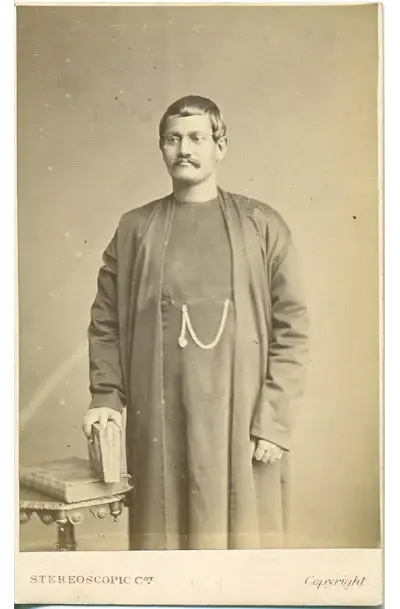
Keshub Chandra Sen was a Hindu philosopher and social reformer who attempted to incorporate Christian theology within the framework of Hindu thought. Born a Hindu in the Bengal Presidency of British India, he became a member of the Brahmo Samaj in 1857 but established his own breakaway "Bharatvarshiya Brahmo Samaj" in 1866 while the Brahmo Samaj remained under the leadership of Debendranath Tagore (who headed the Brahmo Samaj till his death in 1905). In 1878 his followers abandoned him after the underage child marriage of his daughter which exposed his campaign against child marriage as hollow. Later in his life he came under the influence of Ramakrishna and founded a syncretic "New Dispensation" inspired by Christianity, and Vaishnav bhakti, and Hindu practices.
