Margaret MacMillan Quotes
The trouble with the First World War, for example, is that people think war was inevitable, but I don't agree. If you look at the Cold War, you could argue that a war was bound to happen between the Soviet Union and its allies and the United States and its allies, but it didn't.
MacMillan, Margaret. The War That Ended Peace: The Road to 1914. Random House, 2013.


Ironically, at the time she wrote this column, Mrs. Roosevelt was being accused of being a communist by some Southerners who associated her strong views against racism and segregation. Some in the North thought she was a communist because of her active role in the New Deal, Yet here she was, willing to use military force to prevent Soviet expansion.


Compare this to Bernard Baruch's quotation about a cold war the year before.

In 1992 Russia was in terrible economic shape after the fall of the Soviet Union. Keeping up with the United States military expenditures had bankrupted the Russians. The United States which had strategically increased its defense spending to break the Russian economy if they tried to keep up. However, the U. S. expenditures had forced America into a deficit spending period which produced a national deficit greater than all the previous cumulative deficits in our history. So the American economy was not in great shape either. Meanwhile, Japan, whose constitution (imposed by America after WWII) forbade having a military and funding a military. The result was the Japanese economy was growing at a much more rapid rate, and did not have the unbalanced budget of the United States and Russia. Hence, Tsongas’ observation.

Russia then had designs on Afghani Territory. About a century later, Russia Invaded Afghanistan and tried to impose a communist government. It failed and the Afghans drove out the Russians.


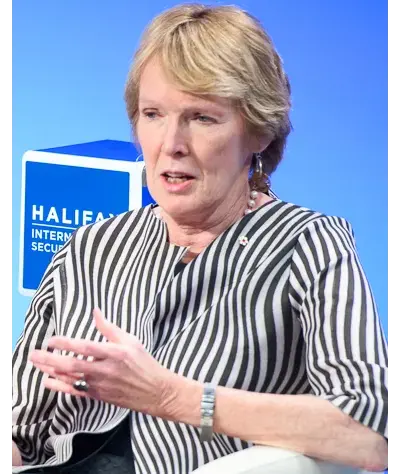
Margaret Olwen MacMillan CC CH is a Canadian historian and professor at the University of Oxford. She is former provost of Trinity College, Toronto, and professor of history at the University of Toronto and previously at Ryerson University. MacMillan is an expert on history and international relations.
