Ryszard Kapuscinski Quotes
People were really interested in what was going on because of the international context of the Cold War.
Kapuściński, Ryszard. The Soccer War. Translated by William R. Brand, Alfred A. Knopf, 1990.


Ironically, at the time she wrote this column, Mrs. Roosevelt was being accused of being a communist by some Southerners who associated her strong views against racism and segregation. Some in the North thought she was a communist because of her active role in the New Deal, Yet here she was, willing to use military force to prevent Soviet expansion.


Compare this to Bernard Baruch's quotation about a cold war the year before.

This editorial marked what most people agreed was the end of the Cold War.

In 1992 Russia was in terrible economic shape after the fall of the Soviet Union. Keeping up with the United States military expenditures had bankrupted the Russians. The United States which had strategically increased its defense spending to break the Russian economy if they tried to keep up. However, the U. S. expenditures had forced America into a deficit spending period which produced a national deficit greater than all the previous cumulative deficits in our history. So the American economy was not in great shape either. Meanwhile, Japan, whose constitution (imposed by America after WWII) forbade having a military and funding a military. The result was the Japanese economy was growing at a much more rapid rate, and did not have the unbalanced budget of the United States and Russia. Hence, Tsongas’ observation.

Most American felt that way at the time of the Russian occupation and the Mujahedeen resistance.


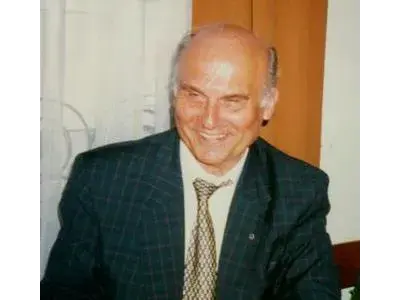
Ryszard Kapuściński was a Polish journalist, photographer, poet and author. He received many awards and was considered a candidate for the Nobel Prize for Literature. Kapuściński's personal journals in book form attracted both controversy and admiration for blurring the conventions of reportage with the allegory and magical realism of literature. He was the Communist-era Polish Press Agency's only correspondent in Africa during decolonization, and also worked in South America and Asia. Between 1956 and 1981 he reported on 27 revolutions and coups, until he was fired because of his support for the pro-democracy Solidarity movement in his native country. He was celebrated by other practitioners of the genre. The acclaimed Italian reportage-writer Tiziano Terzani, Colombian writer Gabriel García Márquez, and Chilean writer Luis Sepúlveda accorded him the title "Maestro".
