Jeane Kirkpatrick Quotes
And I think detente had manifestly failed, and that the pursuit of it was encouraging Soviet expansion and rendering the world more dangerous, and especially rendering the Western world in greater peril.
Kirkpatrick, Jeane. Interview for Cold War. CNN, 1998.


Ironically, at the time she wrote this column, Mrs. Roosevelt was being accused of being a communist by some Southerners who associated her strong views against racism and segregation. Some in the North thought she was a communist because of her active role in the New Deal, Yet here she was, willing to use military force to prevent Soviet expansion.


In 1992 Russia was in terrible economic shape after the fall of the Soviet Union. Keeping up with the United States military expenditures had bankrupted the Russians. The United States which had strategically increased its defense spending to break the Russian economy if they tried to keep up. However, the U. S. expenditures had forced America into a deficit spending period which produced a national deficit greater than all the previous cumulative deficits in our history. So the American economy was not in great shape either. Meanwhile, Japan, whose constitution (imposed by America after WWII) forbade having a military and funding a military. The result was the Japanese economy was growing at a much more rapid rate, and did not have the unbalanced budget of the United States and Russia. Hence, Tsongas’ observation.


During the Cold War and afterwards many Americans attributed the problems we were having with the Soviet Union emenated from the fact that they were Communists, and our focus was anti-communism. Kennen, however argued that it was not Communism that was the cause of the Aggression of the Soviet Union. It was an extension of the Russian Culture. After the Soviet Union collapsed, and Communism was rejected by the Russians, we still had a great deal of Russian aggression and Foreign Policy problems with Russia. Kennan was right. It was the Russian culture, history, values and traditions that were the primary cause of most of the problems with Russia.


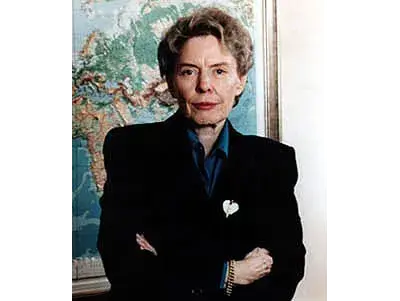
Jeane Duane Kirkpatrick was an American diplomat and political scientist who played a major role in the foreign policy of the Ronald Reagan administration. An ardent anticommunist, she was a longtime Democrat who became a neoconservative and switched to the Republican Party in 1985. After serving as Ronald Reagan's foreign policy adviser in his 1980 campaign, she became the first woman to serve as United States Ambassador to the United Nations.
