Alice Walker Quotes
The trouble with our people is as soon as they got out of slavery they didn't want to give the white man nothing else. But the fact is, you got to give em something. Either your money, your land, your woman or your ass.
Walker, Alice. The Third Life of Grange Copeland. Harcourt Brace Jovanovich, 1970, p. 154.


Many social scientists believe that this is one of the reason for so much racism amongst the lower class whites. If blacks are “below” them, the poor whites have power and are not at the bottom of the sociological pyramid of society. To many this is better than being better off themselves but starring the bottom with the Negroes.


The highway was planned to go through a poor neighborhood which had a high percentage of Black residents—all of whom would have to find other housing and move to make room for the highway. If the government plans a highway through a wealthy area, the cost to condemn and pay for the land will be much greater than if a poor neighborhood is acquired. For urban highways, the poor almost always bear a disproportionate share of the inconvenience while the major benefit inures to the wealthy and middle class. Abbot had been a labor organizer and a professional artist before he entered politics. The graphic is of his famous poster which by itself stopped the plans to build the highway very quickly.


Parker and other escaped slaves in Christiana fought off slave catchers and killed the slave owner leading them. Charged with treason, he escaped to Canada with his family and lived there the rest of his life. While not a polished writer, after he himself had escaped and went to Christiana and leaned to read and write. He wrote this narrative of his life as a slave—one of the few written works we have from slaves.

He was driving through Tennessee and some white demonstrators were carrying racist signs insulting to Blacks. A companion asked what was the cause of Southern white racism.


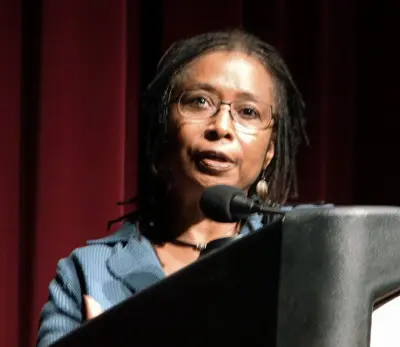
Alice Malsenior Tallulah-Kate Walker is an American novelist, short story writer, poet, and social activist. In 1982, she published the novel The Color Purple, for which she won the National Book Award for hardcover fiction, and the Pulitzer Prize for Fiction. She also wrote the novels Meridian (1976) and The Third Life of Grange Copeland (1970). An avowed feminist, Walker coined the term womanist to mean "A black feminist or feminist of color" in 1983.
