Charles C. Mann Quotes
The thesis of the book in your hands is that Native American history merits more than 9 pages.
He had done an analysis of American History textbooks and found that 9 pages about American Indians and their history before and after Europeans came to America. He and most other historians consider that to be inadequate.
Charles C. Mann, Historian, 1491: New Revelations of the Americas Before Columbus, 2012
Sourced by: Eigen's Political and Historical Quotations


The delegate, speaking for Pope Pius XII, expressed approval for 4,000 Slovakian, Jewish, children refugees to emigrate to Palestine. However, at the same time he expressed the Pope's view that there was no Papal approval of Palestine as a homeland for the Jewish people. In actuality, some Jews inhabited Palestine continuously since the birth of Christ.


Introducing a bill to require a name change for the Washington professional football team:


His Indian Removal Policy forced Native American to leave their lands which were theirs by treaties signed by the United States and marched to the poorest land in Oklahoma where they were "resettled". This is often referred to as the "Trail of Tears". What made his actions evern wors was the fact that The Supreme Court had already ruled that such land belinged to the Cherokee Indian Tribe and the government of the United States may not force them from it. Jackson was the only President in Amrican History to defy a Supreme Court order.


Carson was one of the few Indian Agents who spent every penny of his budget on the Indians as opposed to himself. He was married to an Indian woman and was close enough to many Indians that he understood their resentment whenever they came into a town. They were treated terribly and while most of them were literally starving, seeing the white opulence produced resentment.


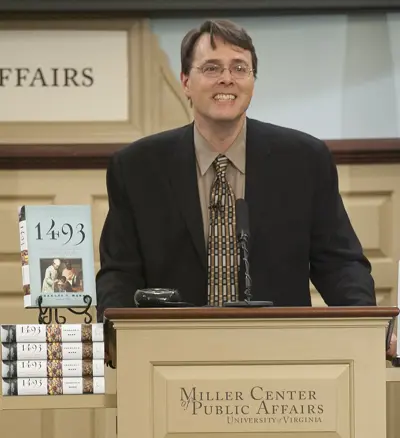
Charles C. Mann (born 1955) is an American journalist and author, specializing in scientific topics. His book 1491: New Revelations of the Americas Before Columbus won the National Academies Communication Award for best book of the year. He is the coauthor of four books, and contributing editor for Science, The Atlantic Monthly, and Wired.
