Gregory Johnson Quotes
The Supreme Court decision [Texas v. Johnson, 1989] does not in any way indicate the government is backing off from forcing the flag on people. They just don't want to look too dictatorial in the way they do it.
Gregory Johnson, Flag-burner, Quoted in The Washington Post, July 4, 1989
Sourced by: Eigen's Political and Historical Quotations

In this case, the Supreme Court held that burning or desecrating the American flag may not be prohibited or criminalized by the government. Flag burning, they ruled, is symbolic speech and is protected by the 1st amendment just like political pamphlets.

Referring to the Supreme Court decision, Texas v. Johnson (1989), in which flag burning was held to be constitutionally protected speech:

The reference is to "symbolic speech" such as flag burning.


Trump was then President Elect who already had a large staff helping him fomake the transition. He still went off on his own with this state,ment whiich runs afoul of the Constitution which he would soon sware to defend when he took the Oath of Office. The Supreme Court had unequivocably ruled that the burning of the flag was a type of political speech and as such could not be curtailed or punished by the government. The penalty of a loss of citizenship was another constitutional thicket. In addition. in the hisoty of the country,, it had never been used as a punishment for breaking domestic law.


This statement was made After the Senate straw-voted 58-42 in favor of a constitutional amendment against flag burning, less than the two-thirds required by the Constitution.


Responding to George W. Bush's call for a constitutional amendment to make burning of the American flag illegal:


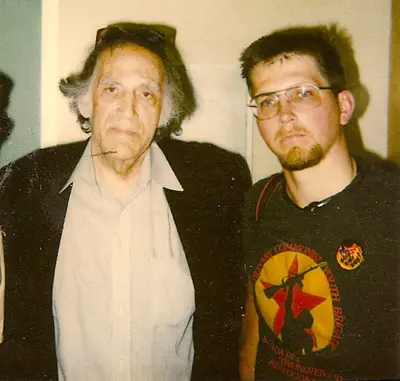
Gregory Lee "Joey" Johnson (born 1956) is a political activist affiliated with the Revolutionary Communist Party USA. His burning of the flag of the United States in a political demonstration during the 1984 Republican National Convention in Dallas, Texas, in violation of a Texas law prohibiting flag desecration, led to his role as defendant in the landmark United States Supreme Court case Texas v. Johnson (1989).
