Ida B. Wells Quotes
The South is brutalized to a degree not realized by its own inhabitants, and the very foundation of government, law and order, are imperilled.
Wells, Ida B. Southern Horrors: Lynch Law in All Its Phases. The New York Age Print, 1892, p. 24.

The editor had discovered that she and her husband had had an affair before they were married and she was still married to another man. This would have ruined her husband’s political career and she decided to prevent that by killing the editor with the information. She was tried for murder and acquitted on the grounds that this was not a rationally premeditated murder but the uncontrollable emotional reaction of a woman who was so weak that she had no control over her actions. This was the excuse that the jury needed, as the personal slandering of politicians for things unrelated to their political activity was becoming very unpopular. This affair was the beginning of the tendency of the French media to not write about the personal and sexual activities of politicians which became a strong cultural tradition.

Mashall was then Solicitor General of the United States.

Even in 1837 there were already riots over slavery and race in a number of American Cities. What is particularly interesting about this quotation is Lincoln bemoaning the violance and contrasting the then present with the past when law and order prevailed. Even our greatest President has had a romantic view of the past with respect to law and order, as many Americans have done in almost every American era.


There were anti-Vietnam war protests going on throughout the country that year. In many of them, especially at universities, protesters took over buildings, and shut down operations. Most Republicans and many Democrats wanted the protests to end, mostly because they feared the spread of the anti-Vietnam war sentiment would catch on and become a position held by most Americans (which it did just as they feared,) They were restrained in what they could do legally by the 1st Amendment. However, there was much breaking of minor laws in many of the demonstrations and that was the focus of the effort to suppress the demonstrations. But in the tradition of civil disobedience, it was the lawbreaking that tended to get the press attention and coverage, so the leaders of the anti-war movement advocated even more lawbreaking, hence Dirksen’s statement to the convention.


Indeed, he was wrong in the sense that the Southern whites did NOT even obey the letter of the law. The Klu Klux Klan and the rest of Southern Jim Crow terrorism broke the laws of the states and local communities as well as Federal law but they did so with impunity. Andrews recognized the problem but never suspected that it would be as bad as it got with public torture and lynching commonplace and approved by most white Southerners.


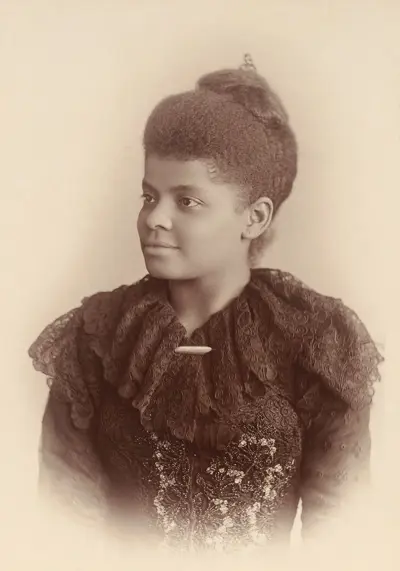
Ida Bell Wells-Barnett was an American investigative journalist, educator, and early leader in the civil rights movement. She was one of the founders of the National Association for the Advancement of Colored People (NAACP). Over the course of a lifetime dedicated to combating prejudice and violence, and the fight for African-American equality, especially that of women, Wells arguably became the most famous Black woman in America.
