Han Fei Quotes
The ruler who possesses methods of government does not follow the good that happens by chance but practices according to necessary principles. Law, methods, and power must be employed for government: these constitute its 'necessary principles.'
Han, Fei. Han Feizi: Basic Writings. Translated by Burton Watson, Columbia University Press, 2003, p. 125.


Cleopatra was an outstanding ruler who spoke 9 languages and depended on relatively few advisors.


The Czar, a total autocrat, was out of touch with most of the civilized world. Under much pressure from his advisors who realized that there was much unhappiness with an autocracy, the Czar made this reform which seemed a major concession and was very much welcomed by the people. However, it had relatively little practical effect. The Duma could not make laws, they could only ratify those made by the Czar and his ministers. However, few members of the Duma were willing to vote against a measure that the Czar wanted. It had no practical effect on improving the standard of living and the economic development of a backward empire.
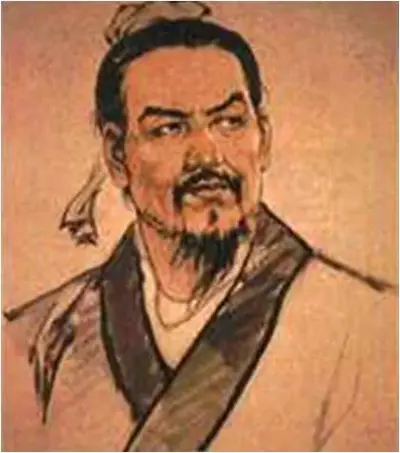
Han Fei (/hɑːn/; traditional Chinese: 韓非; simplified Chinese: 韩非; pinyin: Hán Fēi; c. 280 – 233 BC), also known as Han Fei Zi, was a Chinese philosopher or statesman of the Legalist school during the Warring States period, and a prince of the state of Han.
