Henry Grattan Quotes
The question is not whether we shall show mercy to the Roman Catholics, but whether we shall mold the inhabitants of Ireland into a people as long as we exclude Catholics from natural liberty, and the common rights of man, we are not a people.
He lost be 2 votes.
Henry Grattan, 1746-1820, Irish Member of British and Irish Parliaments, Debate on Irish Catholic emancipation in the British House of Commons, 1819
Sourced by: Eigen's Political and Historical Quotations


This line was quoted by President William Clinton in his Beijing University Speech in June 1998


Roger Williams, the founder of Rhode Island had provided in its charter for freedom of conscience. See {624148}. However later the Colonial legislature withdrew the franchise from Roman Catholics. Despite this temporary restriction of religions freedom, Rhode Island and Connecticut were far ahead of the other New England colonies in freedom of conscience.


Wesley had been to Island several times and was interested in affairs there. He was a strong advocate of freedom of religion but the violence of the earlier religious conflict made him very wary of the Irish Roman Catholics who seemed to him particularly prone to religious violence.

Not all the relations between Irish Catholic and Protestants were hostile. There was a commonality in their Irish nationality and many protestants—especially the educated and more sophisticated—were opposed to the restrictions imposed by England on the rights of the Roman Catholic to practice their religion. See {639274} for another example.


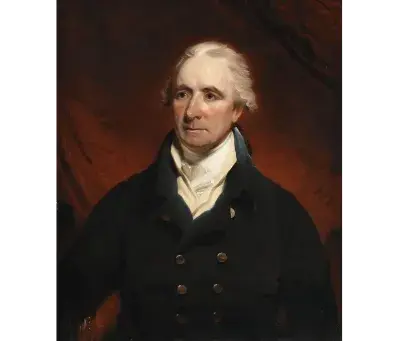
Henry Grattan was an Irish politician and lawyer who campaigned for legislative freedom for the Irish Parliament in the late 18th century from Britain. He was a Member of the Irish Parliament (MP) from 1775 to 1801 and a Member of Parliament (MP) from 1805 to 1820. He has been described as a superb orator and a romantic. With generous enthusiasm he demanded that Ireland should be granted its rightful status, that of an independent nation, though he always insisted that Ireland would remain linked to Great Britain by a common crown and by sharing a common political tradition.
