Queen Victoria Quotes
The Portuguese are, as you say, a most inconceivable set of selfish politicians
Victoria Alexandrina, 1819-1901, [Queen Victoria], Queen of Great Britain and Ireland & Empress of India, Letter to her Uncle, Leopold II, King of Belgium,, January 30, 1837
Sourced by: Eigen's Political and Historical Quotations


This quotation is very interesting in that it shows a President who was not very happy with the policies of his own Secretary of State. This would never have happened overtly after the FDR presidency. Prior, the Secretary of State had a great deal of independence of operation, which was one of the reasons that it was such a prestigious position. However, on modern times President’s would never publicly criticize their own Secretary of State. They would either control the policies directly, accept his/her actions as their own, fire the Secretary, for force him/her to resign as George W, Bush did with Colin Powell. Also, most Secretaries of State, spending most of their time on foreign affairs, become much more sensitive and sophisticated to the intricacies of the world situation, that their nuanced views are very often not viewed by American public opinion as sufficiently pro American. At the same time, there has been a tradition in America that the Secretary of State does not engage in domestic politics, so does not always seem to be pro American.


Chavez frequently insulted officials and leaders of other countries. See linked quotes for examples.


At the time, the Red Scare was prevalent and many Americans were terrified of communists. It was a very effective political tactic to imply that an opponent was a communist or communist sympathizer. For another harsh smear of Stevenson, see {619523}.

This quotation shows American tolerance and freedom of speech even for our head of state.


stating that war was obsolete See {640087} for the quotation of exactly what Angell wrote.

The French leader was one of the first to warn against the Fascism that Mussolini brought to Italy. Although most of the French leadership was opposed to Fascism when it came to fighting Fascism, the French later proved feeble, and many became collaborators and adopted the Nazi puppet state of Vichy France.

Politicians being interviewed and asked about their interest in higher positions are always reluctant to say that they are. Too much political ambition is unseemly with voters. However, if the politician claims little or no interest, if he chooses to run later, is accused of lying or being deceptive. So he/she tends to be ver evasive and find a way of claiming no present interest—saying ‘no’ but leaving loopholes for a later flip flop and change of mind.

Congress at that time had about a 12 percent public approval rating. Other emergency disaster appropriations had been made in previous years in days or weeks, but the aid for New Jersey, New York and Connecticut had been voted by the Democratic-controlled Senate but not in the Republican controlled House. The Republican House leadership had planned a vote after the Fiscal Cliff vote the previous evening before the end of the Congressional term. Then the speaker cancelled the vote infuriating Christie and many of the members of Congress. His reason was that there was opposition from the Tea Party Conservative wing of his own party who had just been badly beaten on the fiscal cliff legislation, and the Speaker was up for reelection by his own party caucus the following day. If the vote had proceeded, it would have passed with Democratic and some Republican support but with the opposition of the conservative wing some of whom noted that the states seeking the emergency aid had just recently voted for President Obama and they were opposed to more federal spending despite the fact that emergency aid had never before been subjected to such partisan criteria. After much pressure, the Speaker then committed to an up or down vote in the following Congress to the chagrin of some of the Tea Party members. Governor Christie, much admired for his commitment to his state and not politicking was his candid self but he did not even go as far as Republican Congressman Peter King {630995}.

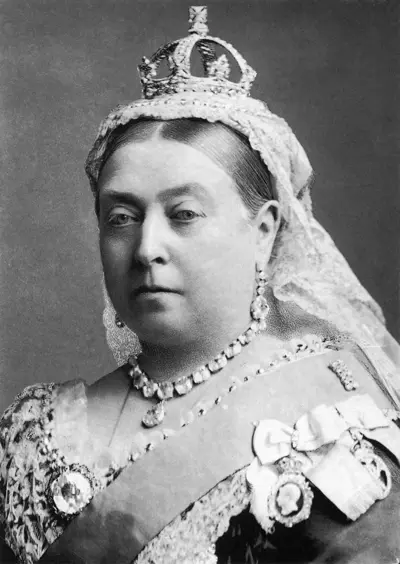
Victoria was Queen of the United Kingdom of Great Britain and Ireland from 20 June 1837 until her death in 1901. Known as the Victorian era, her reign of 63 years and seven months was the longest of any British monarch until surpassed by that of Elizabeth II. It was a period of industrial, political, scientific, and military change within the United Kingdom, and was marked by a great expansion of the British Empire. In 1876, Parliament voted to grant her the additional title of Empress of India.
