Toyotomi Hideyoshi Quotes
The people of the various provinces are strictly forbidden to have in their possession any swords, short swords, bows, spears, firearms, or other types of arms.
Toyotomi Hideyoshi, ~1537–1598, Japanese Daimyo who unified Japan, August 1588
Sourced by: Eigen's Political and Historical Quotations

While the militia had very few arms, Van Rensselaer had no military training and commanded a critical army because of his political connections—common at the time. After he botched the Battle of Queenston Heights he returned to politics but his military failure dogged him for the rest of his career. The quotation is yet another that illustrated the myth of all Americans armed and ready to fight for the nation. There was no gun culture then, and guns were expensive and a minority of Americans owned them. In this case less than 20 percent of the American militia owned a gun. And Congress would just not at the time spend the money for weapons.


She advocated armed self-defense for Blacks.


The Factory had been established by the State of Virginia in 1775 to make guns. America filled with armed Americans in the Colonial era was a myth. Early America was not a gun culture. Guns were expensive, needed maintenance, took too long to reload, and were not as effective for most purposes as other weapons like hatchets and knives. American Colonial war was mostly hand to hand combat with relatively little shooting. Less than one fourth of the men joining Washington’s army owned guns. Gun factories could not survive for want of customers and gunsmiths went into other occupations. See {613052}. With the rebellion, it was critical to manufacture guns to arm the soldiers who had not their own. But the efforts like this were relatively feeble. The factory director who made not a single gun in over a year was then promoted to Commissary General of Munitions in the Continental Army. He was married to George Washington’s sister. He did however finance much of the munitions he procured with his own personal funds so made up in wealth and patriotism what he lacked in manufacturing skill.


One of the major problems in the Palestinian Territory is that a very large proportion of the population is armed with automatic assault weapons. Minor disputes end up with deadly killings and political disputes often result in major shootouts. He argues that it is the government alone that should have the monopoly on weapons and arms.


Thirty young black men and women carrying pistols, revolvers, and shotguns, appeared at the grand entrance of the California Capitol Building. The capital police stopped them and asked what they were going to do with their guns. Bobby Seal replied by asking the police officer what he was going to do with his gun. Seale and the Black Panthers then quoted the Second Amendment to the Constitution and insisted that they had a right to carry guns. Seale led his overtly armed followers inside while police and legislators looked on in horror. They were breaking no law. See the linked quote for Seale’s statement at Sacramento.

In the early 18th century, things were very unsettled between Scotland & England with the succession of both countries in question. The result was the famous union of the two countries in 1707. At the time the Scottish Parliament wanted to intimidate the English as well as to be able to fend off English troops if things did not go well. The clause has much contemporary importance because it shows what a nation would do that wanted every man armed against powers which might restrict their freedom. The American Founding Fathers at the Constitutional Convention knew about this law. They even adopted other ideas from this law--{615975}. If the Founders had wanted every man armed as some modern gun control opponents maintain, they were brilliant drafters and would doubtless have written something like this. It supports the view that what was intended was not an armed nation but a nation where the states could organize “well ordered militias” and the Second Amendment resulted.


Note that he would require a level of education for a citizen to possess weapons. In America it has been suggested that gun training be required as a condition, but the notion of general education is quite different. He was executed for rebellion at age 29. However, a number of his followers went on to leadership positions in the reforms that followed.


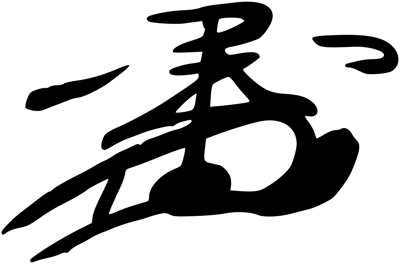
Toyotomi Hideyoshi was a Japanese samurai and daimyō of the late Sengoku period regarded as the second "Great Unifier" of Japan.
