John Keats Quotes
The opinion I have of the generality of women--who appear to me as children to whom I would rather give a sugar plum than my time, forms a barrier against matrimony which I rejoice in.
Keats, John. Letter to Benjamin Bailey, 22 July 1818. The Letters of John Keats: 1814-1821, edited by Hyder Edward Rollins, vol. 1, Harvard University Press, 1958, p. 341.


Much of the culture of sexism and racism is perpetuated by language—especially the language of leaders, role, models, and authority figures. “Political correctness” cannot, in a free society, be enforced on anyone. However, making people aware of the implication of certain kinds of language usage is important provided it doesn’t cross the line of curtailing freedom of speech. People who want to perpetuate sexism by their choice of language have the right to do so in America. What is sad, however is the many people who are perpetuating sexism without ever intending to do so. Abdul-Jabbar has been a leader who has made many male sports figures more aware if the implications of their language usage.


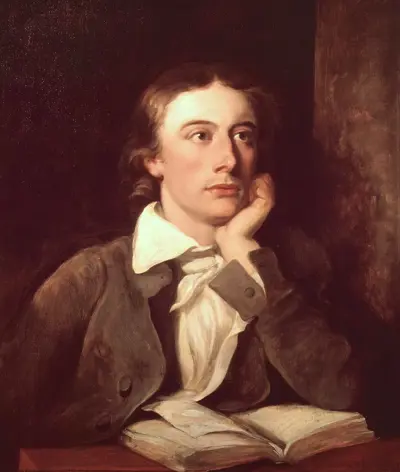
John Keats was an English Romantic poet. He was prominent in the second generation of Romantic poets, with Lord Byron and Percy Bysshe Shelley, though his poems were in publication for only four years before he died of tuberculosis at the age of 25. They were not generally well received by critics in his lifetime, but his fame grew after his death, and by the end of the century he had become one of the best beloved English poets, with a strong influence on many writers. Jorge Luis Borges called his first encounter with Keats' work an experience that he felt all of his life. It had a style "heavily loaded with sensualities", notably in the series of odes. It was typical of the Romantics to accentuate extreme emotion through emphasis on natural imagery. Today his poems and letters remain among the most popular and analysed in English literature. Especially acclaimed are "Ode to a Nightingale", "Sleep and Poetry" and the famous sonnet "On First Looking into Chapman's Homer".
