Anwar Sadat Quotes
The only matter that could take Egypt to war again is water.
Sadat, Anwar. Quoted in Water in Crisis: A Guide to the World's Fresh Water Resources, edited by Peter H. Gleick, Oxford UP, 1993, p. 108.


Water has always been in short supply in the Middle East. For thousands of years in the past water rights and possession was the cause of many conflicts. The rapid increase in fertility and population in the Muslim countries of the Middle East has placed even more stress on the water supply while waste is common. Fortunately Israel and Turkey have developed many techniques of using water efficiently. However, the rest of the Middle Eastern nations are slow to adopt these methods of water conservation, water generation and production, and agriculture that requires much less water than in the past. Politics, religion, and culture can be barriers or facilitators.


Ethiopia was constructing on the Blue Nile, the biggest hydroelectric dam in Africa,. The water supply to Egypt is possibly likely to be somewhat reduced. Since Egypt’s 85 million people get 97 percent of their fresh water from the Nile, this has become a major issue in Egypt. Of course when Egypt constructed the Aswan Dam they, they were not concerned by any environmental effects it might have on other nations,

Even before the drought the California (and other Western States’) water distribution system has been unfair, inefficient, wasteful, and irrational. There is only so much to go around and the demand it greater. Farmers sometimes pay only 1 percent of the cost the state incurs for the water they us. And far less than poor city or suburban dwellers. Few California farmers use the efficient drip irrigation system developed in Israel. Some farmers get most of the water they want while others get nothing. The taxpayers in the rest of the country pay for the California cheap water while they themselves pay many times the cost of the water. Ironically, Conservatives who almost always want market based solutions oppose it in the case of water as then the large corporate farms would not have the huge water subsidy that they have now.


The Arab armies of Egypt, Syria, Jordan and the PLO were preparing a coordinated attack on Israel. After statements like this, the Israeli’s preempted the attack, routed the Egyptian Airforce and Army, and then defeated the other three. The Arab “War of Liberation” resulted in the Arabs losing more with Israel tripling it’s control of area. The quotation however cast a pall over attempts thereafter to create a Palestinian State as in effect the PLO had announced a policy of a Holocaust—the extermination of the Israelis. The dispute over land was not for the Jewish state a land negotiation amenable to compromise and give and take, but instead was an existential threat to Israel whereby any compromise might result in the death of the entire population. As the ultimate intention of the PLO had been revealed.


The nest year California Governor Jerry Brown imposed a form of water rationing.
Agriculture, in most of the country, uses much more water than the human population does for personal drinking and hygiene, but in a number of places there is just not enough water to support all the uses in our growing nation. Agriculture has been organized and has been willing to spend large amounts of money to bribe and/or lobby legislators to block many efforts to develop water supplies for cities large and small under the theory that the more water that went to cities, the less there would be for agriculture.
Coca Cola is mostly water with sugar and a little syrup for flavoring. In addition, water is used heavily in the manufacturing processes of bottles and cans.

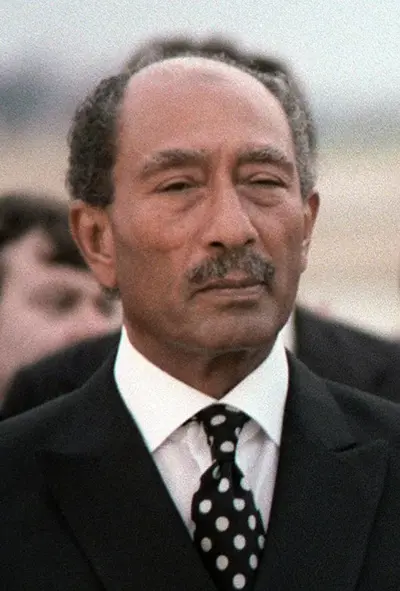
Muhammad Anwar el-Sadat was an Egyptian politician who served as the third President of Egypt, from 15 October 1970 until his assassination by fundamentalist army officers on 6 October 1981. Sadat was a senior member of the Free Officers who overthrew King Farouk in the Egyptian Revolution of 1952, and a close confidant of President Gamal Abdel Nasser, under whom he served as Vice President twice and whom he succeeded as president in 1970. In 1978, Sadat and Menachem Begin, Prime Minister of Israel, signed a peace treaty in cooperation with United States President Jimmy Carter, for which they were recognized with the Nobel Peace Prize.
