Jimmy Breslin Quotes
The office of the President is such a bastardized thing, half royalty and half democracy, that nobody knows whether to genuflect or spit.
Jimmy Breslin, Political Columnist, Quoted in David Olive, Political Babble, John Wiley & Sons, 1992
Sourced by: Eigen's Political and Historical Quotations


1st Earl of Beaconsfield


This letter was written shortly after the Constitution had been signed by the convention delegates. This difference between Adams and Jefferson would be at the heart of the first great partisan struggle in American history. Adams, as the second President, tried to increase and use the power of the Presidency. Jefferson opposed him, especially when Adams tried to run for a second term. The Adams-led Federalists were pitted against Jefferson’s Democratic Republicans in the first, and perhaps still the most bitter partisan struggle in American political history. The Jeffersonians accused Adams and the Federalists of trying to unravel the American Revolution and revert to a monarchy. The people not only sided with the Democratic Republicans, ousting Adams, but also turned out most of the Federalists. It was the end of the Federalist Party, and a new conservative party—without monarchial tendencies—the Whigs became the new opposition party.


Although a right wing conservative, he shared the view of many liberals that it costs so much money and needs so many rich contacts to raise enough money to run for President, that the reality is beyond the reach of ordinary Americans. Since Harry Truman, all the Presidents have been affluent, and most millionaires.


Also attributed to John F. Kennedy and Lyndon B. Johnson


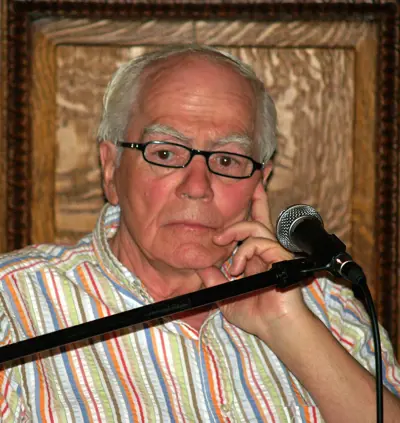
James Earle Breslin was an American journalist and author. Until the time of his death, he wrote a column for the New York Daily News Sunday edition. He wrote numerous novels, and columns of his appeared regularly in various newspapers in his hometown of New York City. He served as a regular columnist for the Long Island newspaper Newsday until his retirement on November 2, 2004, though he still published occasional pieces for the paper until his death. He was known for his newspaper columns which became the brash embodiment of the street-smart New Yorker, chronicling wise guys and big-city power brokers but always offered a sympathetic viewpoint of the working-class people of New York City, and was awarded the 1986 Pulitzer Prize for Commentary "for columns which consistently champion ordinary citizens".
