Arthur Henderson Quotes
The more the history of the World War and what led up to it is studied, the more clearly those tragic years become revealed as a vast collapse of civilization.
Henderson, Arthur. "Essential Elements of a Universal and Enduring Peace." Nobel Lecture, 11 Dec. 1934, Oslo. Nobel Lectures, Peace 1926-1950, edited by Frederick W. Haberman, Elsevier Publishing Company, 1972.


1914 was the outbreak of WWI in which all the belligerents had very different interests and reasons for war—even allies on the same side greatly differed as to their motivation for fighting.


The Times regretted that the Germans did not speak to the Austrians more vigorously when they were threatening to attack Serbia who harbored anti-Austro-Hungarian terrorists (see {642085}). What the Times editors did not realize was that the Germans had already made their war plans (see {642092}) and the Serbian issue was just the justification they needed to implement them. So there was no real reason for the Germans to discourage the Austro-Hungarian Empire from its mission to punish Serbia.


See the American ambassador’s assessment after the war began {41089}

Note that he assumes that not only will there be another World War, but he assumes that we will be on opposite sides.


stating that war was obsolete See {640087} for the quotation of exactly what Angell wrote.


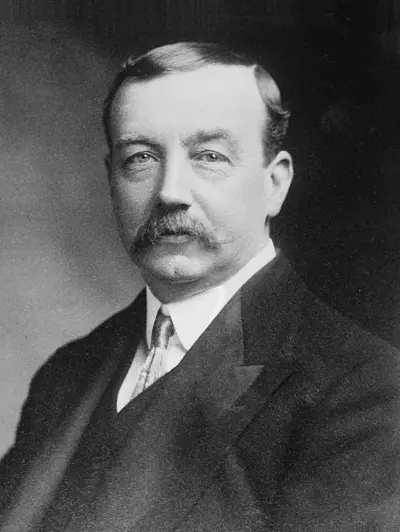
Arthur Henderson was a British iron moulder and Labour politician. He was the first Labour cabinet minister, won the Nobel Peace Prize in 1934 and, uniquely, served three separate terms as Leader of the Labour Party in three different decades. He was popular among his colleagues, who called him "Uncle Arthur" in acknowledgement of his integrity, his devotion to the cause and his imperturbability. He was a transitional figure whose policies were, at first, close to those of the Liberal Party. The trades unions rejected his emphasis on arbitration and conciliation, and thwarted his goal of unifying the Labour Party and the trade unions.
