W. E. B. Du Bois Quotes
The mass of ignorant Negroes still breed carelessly and disastrously, so that the increase among Negroes, even more than the increase among whites, is from that portion of the population least intelligent and fit, and least able to rear their children properly.
Many people erroneously attribute this quotation to Margaret Sanger, who had observed that the upper class women generally knew how to practice birth control and could obtain the devices that were available at the time while the poor and uneducated knew very little and not only did not have the money to obtain birth control devices, but the laws made it illegal so that no one dared to promote it. Du Bois was in many ways, a Black elitist and this quotation reflects that.
W. E. B. Du Bois, 1868-1963, Educator & Author, Co-Founder of the NAACP, Birth Control Review, June 1932.
Sourced by: Eigen's Political and Historical Quotations


Robert Allen Zimmerman


Johnson was the first Black man who won the heavyweight championship at a time when racism in America was rampant. Many whites referred to Jeffries as “The Great White Hope” who would take the champion back for the whites. He didn’t and was beaten badly.


There were almost no Blacks who agreed with him on this point. Nor do the vast majority of economists today. But Friedman believed that if there were no minimum wage scale, more lower wage workers would find jobs and learn skills to justify a higher wage later in their careers. To some extent, this used to be so for those occupations which require experience and/or apprenticeship. However, by the 21st century, people in minimum wage jobs can, from their jobs, rarely learn enough to economically justify a higher wage position. A minimum wage job became a dead end job for all but students and people in between other endeavors. Therefore the advocates of minimum wage argue that there should be a living wage so that as President Obama said, “No one should work full time, and not make enough to emerge from poverty.”


When passed, the Social Security Act did not cover domestic or agricultural workers. But these were the two occupations that between employed over half of all African Americans. The Black labor leaders like A. Phillip Randolph, supported the Act as their union membership was covered. The Congress, although controlled by the Democrats had the albatross of the "Solid South" which would obstruct anything that would strengthen the Negro. The strategy the President Roosevelt and his new dealers adopted was to institutionalize Social Security for the majority of American workers and then bring in the occupations and groups that had originally been excluded. And this is what they did however, enforcement of Social Security coverage with individual domestic workers was still a problem in the 21st century.


At the time, racial discrimination was so rampant in America that when one of the units of Pepsi Cola, under the leadership of Walter Mack, hired Emmons to sell to Black communities, the Black residents of Northern communities were so unused to seeing Blacks in a “white collar” job, that they were treated as celebrities. Emmons and a few other black salesmen had incredible results yet despite that, the practice did not grow at the time as there were too many white executives who were so prejudiced that the practice was not increased after Mack retired. This short quotation paints a good picture of the nature of racial job discrimination in the North prior to WWII.

Jackson was a civil rights worker who was murdered by white racists trying to intimidate Blacks from their desegregation efforts. King broadened the moral responsibility to those who did not oppose the segregationist system prevalent in the South.
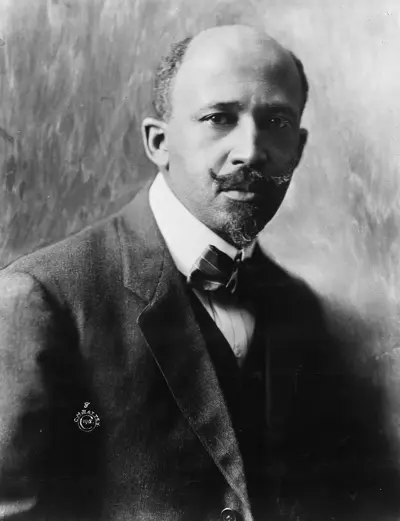
William Edward Burghardt Du Bois was an American sociologist, socialist, historian, and Pan-Africanist civil rights activist. Born in Great Barrington, Massachusetts, Du Bois grew up in a relatively tolerant and integrated community. After completing graduate work at the Friedrich Wilhelm University (in Berlin, Germany) and Harvard University, where he was the first African American to earn a doctorate, he became a professor of history, sociology, and economics at Atlanta University. Du Bois was one of the founders of the National Association for the Advancement of Colored People (NAACP) in 1909.
