Samuel Adams Quotes
The love of power, like the love of money, increases with the possession of it; and we know in what ruin these baneful passions have involved human societies in all ages when they have been let loose and suffered to rage uncontrolled - There is no restraint like the pervading eye of the virtuous citizens.
Adams, Samuel. The Writings of Samuel Adams. Edited by Harry Alonzo Cushing, vol. 2, G. P. Putnam's Sons, 1906, p. 306.


Ingersoll was considered to be the greatest orator and political thinker of his day, but his overt atheistic views curtailed his elected political career.


He was a key figure in the Social Gospel movement which flourished in the United States during the late 19th and early 20th century. Many saw this movement as more dangerous than Communism and some even saw it as Communism. In America there have always been left and right wings of religion and one or the other tends to make the most noise at a particular era.


What is fascinating about this quotation is that although the head of a religion, Smith was not advocating the kinds of personal lifestyles of his church the way modern religious leaders do, but was concerned with the much larger issues of expansionism, corruption of the courts and judiciary, and land distribution. He was a classic reform candidate in that sense. Smith had written to most of the then likely Presidential candidates of both major parties asking for their position on the Mormons who were facing persecution wherever they went. None of the politicians would make any satisfactory commitments. Smith took Direct Action and became the only major religious official to have run for the Presidency of the United States until Pat Robertson tried and failed in 2000. Smith’s assassination shortly thereafter cut his run for the Presidency short before it made much headway and politically he had no chance to affect the race.


Iturbide, known also as Agustin I, was the first Emperor of Mexico who was executed by a firing squad.
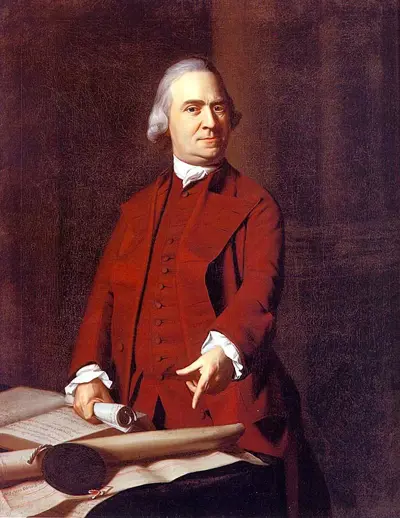
Samuel Adams was an American statesman, political philosopher, and one of the Founding Fathers of the United States. He was a politician in colonial Massachusetts, a leader of the movement that became the American Revolution, and one of the architects of the principles of American republicanism that shaped the political culture of the United States. He was a second cousin to his fellow Founding Father, President John Adams.
