Queen Victoria Quotes
The loss of so many officers, the Queen is certain, proceeds from their wearing a blue coat whilst the men are in scarlet; the Austrians lost a great proportion of officers in Italy from a similar difference of dress.
The British had won an expensive victory against the Boers in South Africa. The casualties among the officers was particularly high. The British military uniforms were very important to the senior military leaders and the officers in general always wanted to distinguish themselves from the enlisted men. This had traditionally been accomplished by outfitting the officers in a contrasting color from the ranks. This allowed the rebel Boer farmers, who were good shots and had no tradition of not targeting officers as many European armies did, to pick off the officers and with few to lead them thee British troops did not continue their attack. The young queen of 29 years, with no military training whatsoever, was very familiar with the uniforms as a result of all the pomp and circumstance associated with the crown. She immediately recognized the problem and instructed the military leaders to change the uniforms. It is hard to believe how hidebound and traditional the British military was even when their own lives were at stake. It is yet another example of the intellect and knowledge of the queen and shows that her insistence on not being a figurehead extended even to the all male bastion of the military. There was no aspect of British society and government that this talented Queen did not get involved with.
Victoria Alexandrina, 1819-1901, [Queen Victoria], Queen of Great Britain and Ireland & Empress of India, Letter to Earl Grey, October 26, 1848sh
Sourced by: Eigen's Political and Historical Quotations

1776 at the Battle of Bunker Hill This was the first formal battle of the American Revolution. The British officers perceived the American colonials as a rag-tag collection of men with no experience or skill at arms. Looking for glory they led from the front and if nothing else the Colonials were superb marksmen who picked the officers off easily. After that battle, British officers were more prudent and respectful of the revolutionaries.


the soldiers of King George The early American Revolutionary Army was not led by many competent seniors officers. Many of the general officers were such by virtue of socio-economic class rather than talent or merit. Rush ran the hospitals for the Revolutionary and talked to many officers and enlisted men, and also observed much of the British military practices.


Churchill saw before many others that technology and weaponry had changed the nature of warfare. At the time the military leadership of all the major powers were pursuing 19th century tactics with 20th century weaponry including mass bayonet charges against machine guns behind barbed wire. Churchill and other civilians, although they had legal control over the military, had little de facto tactical control. As a politician he became an itinerant meddler in military tactics thereafter.


3 years later he led America on a huge invasion and nation building project in Iraq. It turned out that had he listened to his own advice and not flip-flopped, the huge cost of the Iraq War might have been avoided.


The French and English, with larger numbers and more experienced troops and officers, wanted the American units to come under the command or their officers and be integrated into the allied army. However Wilson established the tradition that American troops fighting abroad most always fight as an American Army under American Command. Although resented then and into the 21st century by America’s allies who are expected to fight under American command, it is a tradition that no American major politician has seriously challenged since then.

The Centograph is a war memorial monument in London. On Remembrance Day, a British Patriotic Holiday, veterans march past the Centograph. The quotation is text uttered by one of her characters.
We are so accustomed to thinking about George Washington as a great military leader that it is surprising to see contemporary comparisons where Washington was found wanting or second. Actually Horatio Gates was a brilliant tactical general and a great leader of men—many think far better than Washington, but the genius of Washington was his strategic and political grasp of the situation. Essentially, with exceptions like the Battle of Trenton, Washington lost almost all the battles he fought as a tactical general. He realized early on that he did not have to win battles; he just had to prevent losing them so badly that he could not continue the fight. The insurgent wins as long as he can still fight. The British could not win unless they eliminated the ability of the revolutionists to fight. But Washington won the last battle at Yorktown, and that is the one that counted. Rush ran the hospitals for the Revolutionary Army and talked to many officers and enlisted men, and also observed much of the British military practices.
General Howe was the Commander of British Troops in the American Revolution. The early American Army was neither professional, experienced, or well officered. Execution as a means of punishment was much more common than in the larger, professional British army. Rush ran the hospitals for the Revolutionary Army and talked to many officers and enlisted men, and also observed much of the British military practices.


While running for office he was trying to win the support of Republcian Conservatives who were very unhappyt with their percieved lack of progress in fighting ISIS. However, this was insulting to many military people--especiually since ISIS was being deprived of they sources of funding and oil trade, their leaders were being killed at a rapid rate, and they were losign most of their territory. After he won the Presidency, on the very night of his inaguration he then flip flopped and paraised the general leadship of the military. While most politicans had a certain degree of hypocricy, Trump could make totally contrdictory statements without any embarassment. See Quote 644331..

This quotation illustrates an interesting characteristic of the British colonial military. The British military, under “Chinese Gordon” were assigned to help the government of the Empress Cixi put down a The Taiping Rebellion. However, the British army used just enough force to achieve the military objective, and would take prisoners and kill as few Chinese as possible. This was unsatisfactory to Earl Li who wanted all the rebels killed. His forces were not strong enough or brave enough to beat the rebels, but they were very adept at slaughtering defeated soldiers and their followers and supporters. Li, like most of the Chinese elite at the time, placed very little value on individual Chinese lives. However the fact that Gordon and his men did value individual Chinese lives highly impressed the Empress who was intent on modernizing China against the wishes of most of her court and nobility.
Socioeconomic class was a major factor in the Continental Army just as it was in the British Army. New York, unlike New England, did not have the clear-cut majority in favor of independence. Most of the working class at this stage had no opinion on independence as they did not need to and were not of the social class that had been discussing and arguing about the relationship with England. The upper class had been discussing the issue for some time and were polarized into Patriot and Loyalist sympathies. When the Patriots of New York voted to raise its first Regiment, the first people to volunteer were the men of the upper class who had been debating the question for some time. Because of their social class, they had to be officers. The lower classes got into the intellectual and political debate later, and they too were divided. The Patriots among them then volunteered to provide the privates and other enlisted men to the NY regiment. But the early contingents of New Yorkers were very top heavy with officers. While not as rigid as the Continental Army, the modern American Armed Services are still affected by this tradition. While there are many exceptions, there is still a strong correlation between military rank and socioeconomic family status.


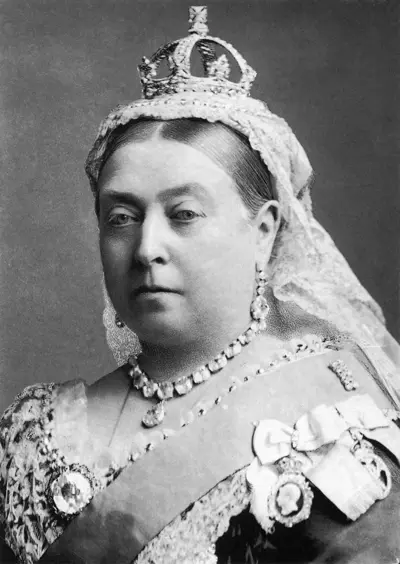
Victoria was Queen of the United Kingdom of Great Britain and Ireland from 20 June 1837 until her death in 1901. Known as the Victorian era, her reign of 63 years and seven months was the longest of any British monarch until surpassed by that of Elizabeth II. It was a period of industrial, political, scientific, and military change within the United Kingdom, and was marked by a great expansion of the British Empire. In 1876, Parliament voted to grant her the additional title of Empress of India.
