Pablo Neruda Quotes
The Liberator [Simon Bolivar] arises every time the people regain consciousness,.
Pablo Neruda, 1904-1973, Chilean Diplomat & Nobel Laureate, Literature, Quoted in Marie Arana, Bolivar: American Liberator, 2013
Sourced by: Eigen's Political and Historical Quotations

Lev Davidovich Bronstein. Lenin Did not agree and thought things were so desperate after the 1917 Revolution so that he advocated terrorism {636607} to stabilize the society. Stalin in contrast thought that terror was indispensable and this was one of the major reasons Stalin and Trotsky fell out and by this means, Stalin had Trotsky murdered when he was in exile in Mexico.


Chile with help from San Martin had ejected the Spanish. O’Higgins, the Chilean leader had joined up with San Martin and served under his command. The sectional rivalry bothered men like Carrera. Instead of seeing all the South Americans fighting the Spanish as allies as O’Higgins did, Carrera and his brothers refused to join a government of unity and they and their troops were just as dictatorial and cruel as the Spanish had been. O’Higgins gave Indians and Blacks equal rights with whites which distressed the aristocratic Carrera’s. Finally the Carrera’s tried to set up their own government, and the new Chilean government disarmed their militia and executed two of the three Carrera brothers who were leading the militia troops who were little more than thieves and brigands.

See {633023} for an example of this transition.


Africa and the Middle East, and the former Soviet States were particularly plagued with this problem, but is was also common in Asia and Latin America.


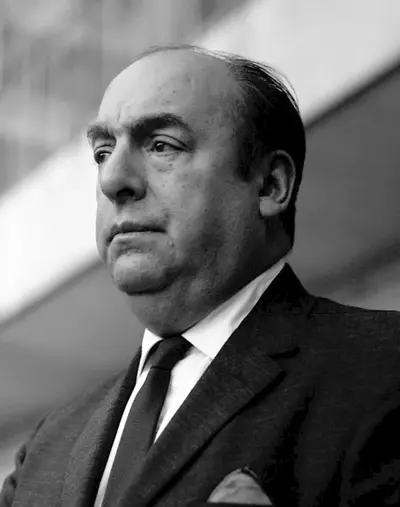
Ricardo Eliécer Neftalí Reyes Basoalto, better known by his pen name and, later, legal name Pablo Neruda (/nəˈruːdə/; Spanish: [ˈpaβlo neˈɾuða]), was a Chilean poet-diplomat and politician who won the Nobel Prize for Literature in 1971. Neruda became known as a poet when he was 13 years old, and wrote in a variety of styles, including surrealist poems, historical epics, overtly political manifestos, a prose autobiography, and passionate love poems such as the ones in his collection Twenty Love Poems and a Song of Despair (1924).
