William Blackstone Quotes
The husband … might give the wife moderate correction, for as he was to answer for her misbehavior, he ought to have the power to control her.
William Blackstone, 1723-1780, British Jurist, Commentaries on the Laws of England, 1783
Sourced by: Eigen's Political and Historical Quotations

“Political correctness” is a loosely defined concept of not discussing political issues in terms that are derogatory and/or might be offensive to particular groups or nationalities. Many orthodox Muslims (and orthodox Christians) are of the opinion that their religion calls for the male being the dominant figure in the household and having the right and obligation to discipline the children and the wife or wives. To state that such a practice is sexist, barbaric, undemocratic, and damaging to family and society is an insult to some of these religious believers. The Egyptian law was passed to reflect God’s commandments and so to question it is to some, blasphemous and for other nations to criticize it is insulting to some ultra orthodox Muslims. However, in cases like these, Ms. Eltahawy argues for ignoring political correctness and most Americans would agree as would most of the modern and generally educated Muslims in Egypt.

The violence which was “trifling” to the judge and the husband was obviously not perceived as such by the beaten wife.
That is easy for the man to do. At the time, this Indian view was little different than that prevailing amongst religious Christian whites.

Some modern versions of the Koran annotate the “beating” injunction and argue that this should only be used as a last resort. This is an example of socially unacceptable anachronisms that are found in the scripture of most older religions. All but the radical fundamentalists do not take these passages literally.

These murders were punished by burning at the stake and other gruesome forms of execution as if a king had been murdered.


This is the passage of the Bible that causes many fundamentalist Christians to believe that wives should obey and be subservient to their husbands. Other Christians believe that this as archaic as stoning adulterers or executing children who are not obedient to their fathers. Ironically, this is one area where many fundamentalist Christians and fundamentalist Muslims are in agreement.

This law is noteworthy for two reasons. First, women found it easier to wash clothes in the running streams rather than at home where most often there was no plumbing or running water. But the sight of women washing clothes was apparently so sexually stimulating to Afghan men, that the practice had to be stopped. While washing a bare arm or leg might be seen. However, in this case, the law had the husbands punished (usually beaten) so that they would exercise more control over their wives.

This seems to be the first instance of the famous dictum.
This is the Admiral who commanded that invasion of Washington DC and the burning of the White House. It was in retaliation for the destruction of buildings in the American invasion of Canada that began the War of 1812.
No amount of ill usage, without adultery superadded, will in England free a wife from her tormentor.
The requirement of adultery for any divorce extended to the 1960's in America.
Some modern Islamic scholars have attempted to make this Sura more acceptable by arguing that the size of the stick with which the man may beat the “disobedient” wife should be limited. The contemporary argument concentrates on the size of the stick. There are also a few fundamentalist Christians who advocate the right of a husband to beat his wife on the grounds that this was accepted in Biblical times.
This is the biblical passage which causes so much trouble in modern society. Literal adherence to this passage produces a sexist environment which is at odds with many modern norms of fairness and equity. Thus, religious fundamentalists are in conflict with most others. At the same time this passage serves as a justification of sexism for some.

England in contrast did not even educate many men in arithmetic and accounting and women not at all with the sexist English culture of the day. English merchants were notorious for selling their business at low prices as they got older unless they had an adult son with an aptitude for the business. The Dutch, with educated women could have a wife run a business if the husband died or was disabled, and allow children to grow up, thus keeping the business in the family, but more important for Holland, keeping the business thriving.


In English law, the second a woman married, she ceased to exist and an entity independent from her husband who had total control in the family. This doctrine was carried over to American law. See {629246}.

Note that the fact that she had suffered sposal abuse. She poisoned her husband who repeadedly beat her and her children. Althoughh the evidence was heard, there was nothing that could in the then German legal system used to justify the killing of a husband. Germany was not then the only country which would not allow violent spousal abuse as a defense or a mitigating factor in the sentence. The German punishment for a woman murdering her husband was then beheading. Even as late as the mid 19th century, they were still decapitating trangressors of their laws. The Germans actually developed a special kind of sword with no point just for beheadings.


It is of little comfort to the Muslim wife who is beaten to know that her abusive spouse is not among the “best” of men in the eyes of Allah. She probably had such suspicions herself.
There are many societies of the world where at one time spousal abuse was common and the superstitious thought that it improved the quality of family lives. These were the same societies that thought that storms and natural disasters were the punishment of the Gods, that saw no relationship between disease, infection and cleanliness—sanitation, freedom and happiness. This quotation shows us how far we have come as humans.
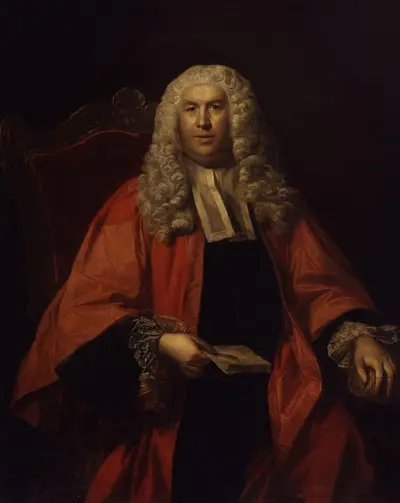
Sir William Blackstone SL KC was an English jurist, judge and Tory politician of the eighteenth century. He is most noted for writing the Commentaries on the Laws of England. Born into a middle-class family in London, Blackstone was educated at Charterhouse School before matriculating at Pembroke College, Oxford, in 1738. After switching to and completing a Bachelor of Civil Law degree, he was made a fellow of All Souls, Oxford, on 2 November 1743, admitted to Middle Temple, and called to the Bar there in 1746. Following a slow start to his career as a barrister, Blackstone became heavily involved in university administration, becoming accountant, treasurer and bursar on 28 November 1746 and Senior Bursar in 1750. Blackstone is considered responsible for completing the Codrington Library and Warton Building, and simplifying the complex accounting system used by the college. On 3 July 1753 he formally gave up his practice as a barrister and instead embarked on a series of lectures on English law, the first of their kind. These were massively successful, earning him a total of £453 (£71,000 in 2021 terms), and led to the publication of An Analysis of the Laws of England in 1756, which repeatedly sold out and was used to preface his later works.
