Josiah Child Quotes
The education of their Children, as well Daughters as Sons; all whiesch, be they of never so great quality or estate, they always take care to bring up to write perfect good hands, and to have the full knowledge and use of Arithmetick and Merchants’ Accounts; the well understanding and practice whereof, doth strangely infuse into most that are the owners of that quality, of either Sex, not only an ability for Commerce of all kinds, but a strong aptitude, love, and delight in it; and in regard the women are as knowing therein as the men, it doth encourage their Husbands to hold on in their Trades to their dying days, knowing the capacity of their Wives to get in their Estates, and carry on their Trades after their Deaths.
England in contrast did not even educate many men in arithmetic and accounting and women not at all with the sexist English culture of the day. English merchants were notorious for selling their business at low prices as they got older unless they had an adult son with an aptitude for the business. The Dutch, with educated women could have a wife run a business if the husband died or was disabled, and allow children to grow up, thus keeping the business in the family, but more important for Holland, keeping the business thriving.
Josiah Child, 1630-1699, English Governor of the East India Company, Explanation of the Dutch system of mathematics education for boys and girls that was so successful, Brief Observations Concerning Trade and Interest of Money, 1668
Sourced by: Eigen's Political and Historical Quotations


This was one of the first higher educational opportunities for women in England. Note how they felt they had to justify higher education for women.


A Polymath is a genius in a number of different subjects. She learned her mathematics initially by listening in on her brother’s tutoring sessions. She published in mathematics, geography, physics, astronomy, and biology. Although her first husband was totally unsupportive as indicated in the quotation, after his death, her second husband was a great asset to her and assisted her in many ways.

The editorial was in support of women’s suffrage—the right to vote which at the time women did not have in Britain. Women were very active in protests and demonstrations. Tactics sometimes involved civil disobedience and chaining themselves to public buildings. It was the civil disobedience and disruptions that the newspaper referred to as the “follies and excesses.” In retrospect today, it is amazing how threatened the society felt and how they reacted to the “threat” of females voting. It does however give us a perspective on those contemporary societies which restrict women’s voting rights.


“Political correctness” is a loosely defined concept of not discussing political issues in terms that are derogatory and/or might be offensive to particular groups or nationalities. Many orthodox Muslims (and orthodox Christians) are of the opinion that their religion calls for the male being the dominant figure in the household and having the right and obligation to discipline the children and the wife or wives. To state that such a practice is sexist, barbaric, undemocratic, and damaging to family and society is an insult to some of these religious believers. The Egyptian law was passed to reflect God’s commandments and so to question it is to some, blasphemous and for other nations to criticize it is insulting to some ultra orthodox Muslims. However, in cases like these, Ms. Eltahawy argues for ignoring political correctness and most Americans would agree as would most of the modern and generally educated Muslims in Egypt.

Robertson was so fearful of feminism that he ascribed almost every evil in society to it as well as witchcraft.
He was very conservative in almost all things, but here and with poverty (see {638805}) he was far ahead of his time.


She was prescient. The amendment was never ratified by enough states.

Vladimir Lenin


The Emperor was then only 20 years old and it is doubtful that this was actually written by him personally or even that he was the originator or driver of this policy—probably the strongest statement regarding education of any nation in history. Nonetheless, it is a great quotation on the role of education in the nation. He even ordained that all girls should be educated—an achievement which had not been achieved by the majority of countries 140 years later in 2012. Most incredible about this quotation is that the Emperor made everything else of importance subordinate to the education of children." Meiji the Great
She was instrumental in outlawing slavery and two years after this speech she and her daughters appeared in public without the traditional Burka or veils. The conservative fundamentalists were outraged and they deposed her husband and her modern influence ended.
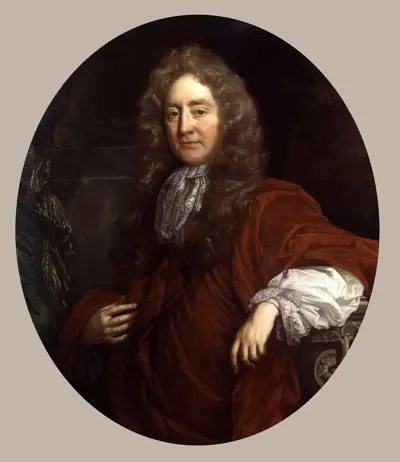
Sir Josiah Child, 1st Baronet, MP, was an English economist, merchant and politician. He was an economist proponent of mercantilism and governor of the East India Company. He led the company in the Anglo-Mughal War.
