Richard Henry Lee Quotes
The human mind is too apt to rush from one extreme to another; it appears, by the objections that came from the different States … For now the cry is power, give Congress power. Without reflecting that every free nation, that hath ever existed, has lost its liberty by the same rash impatience, and want of necessary caution.
Richard Henry Lee, 1732-1794, Member of the Continental Congress, Signer of the Declaration of Independence, U.S. Senator (VA), Letter to George Mason, May 15, 1787
Sourced by: Eigen's Political and Historical Quotations

Lippmann was the most influential pundit of the time. Roosevelt had just been elected but had not yet assumed office. The country was in the midst of the Great Depression and many communities had 80% unemployment. Banks had failed, people were starving, and many people thought that democracy was just not suited to deal with such severe problems. Roosevelt, however rejected the advice and always worked through the Congress and in so doing saved democracy in America.


Note the phrase “well regulated militia.” This is the exact same phrase which the Founding Fathers chose to use in the Second Amendment of the Bill of Rights over a decade later. And in this amendment the right to bear arms is provided for the “well regulated militia” and not for individuals as the Supreme Court has ruled many times. This quotation shows that the phrase was not just drafted by the founders, but had a clear and established meaning of which they were aware. Many people think that the phrase did not have a known meaning at the time but this quotation shows differently as the Constitutions of all the States were available to and studied by the Congress and most educated people.


Although the author was unknown, Cato had a following and his material was very influential.

At that point in American History there were some who thought that the Congress was aggregating too much power. At the beginning of the 21st century we bemoaned a weak Congress and worried about an imperial and too powerful an executive while a few thought that the Judicial branch had become too powerful in “legislating from the bench.”
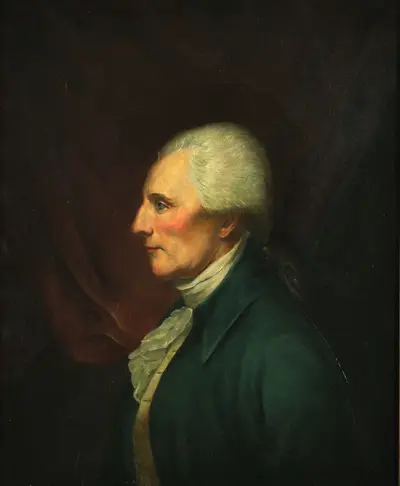
Richard Henry Lee was an American statesman and Founding Father from Virginia, best known for the June 1776 Lee Resolution, the motion in the Second Continental Congress calling for the colonies' independence from Great Britain leading to the United States Declaration of Independence, which he signed. He also served a one-year term as the President of the Continental Congress, was a signatory to the Articles of Confederation, and was a United States Senator from Virginia from 1789 to 1792, serving during part of that time as the second President pro tempore of the upper house.
