Derek Walcott Quotes
The history of the world - by which, of course, we mean Europe - is a record of intertribal lacerations, of ethnic cleansings.
Walcott, Derek. "The Antilles: Fragments of Epic Memory." The Nobel Foundation, 1992.


See the American ambassador’s assessment after the war began {41089}

He was a brutal, sadistic war criminal who was assassinated by one of his many enemies in 2000 before he could be brought to trial. This statement was typical of his outlook and behavior. He tortured and murdered Croation and Muslim prisoners. His reference to the “slaughterhouse” was to the Second World War in which the Croats were allies of Nazi Germany and created their own concentration and extermination camps where hundreds of thousands of Serbs were murdered. In the eternal memory of the cycle of revenge in the Balkans, Arkan, tried to retaliate against the Croats who had never been called to account for their crimes and even the leadership of Croatia after the Camp David accords celebrated the Fascist times when they were dominant and were able to settle accounts with the Serbs.

Armenian dissidents in Turkey formed military units like Hinchak which during the First World War, attacked unarmed Turkish Muslim Villages behind the front lines. The object of the Armenians was to have turkey lose the war and obtain their own ethnic state afterwards. The atrocities committed by the Armenians were unfortunately matched by the Turks in what is now referred to as the “Armenian Genocide”. The hatred still prevails – see {588211}.


He was a brutal officer who by modern standards committed various war crimes.


Churchill was reported to be so angry and exasperated that his face turned red and he was sputtering. During World War II, Gandhi, Nehru and other Indian Nationalists were leading protests against British control of India. This not only bogged down British soldiers surprising the nationalists rather than fighting in Burma or in other war theaters, but India supplied a huge number of battalions to the British Army the world over and if that manpower dried up, the allied war effort would suffer. The American State Department wanted Churchill to announce that after Japan was defeated, there would be a process toward self-government. This way, they thought, the Indians would redouble their effort to defeat the Japanese and stop the then current protests and strikes. Churchill was strongly opposed to any diminution of the British Empire, but beyond that, he knew India quite well and realized that at any hint of Independence the large Muslim minority in India would insist on autonomy or a partition of the country and use sectarian violence and terror to intimidate the Indian Congress party and the British, but the major victims of the terror—the Hindus and the Sikhs would not remain passive, but would retaliate in kind. President Roosevelt was in the midst of planning the Normandy Landings of the D-Day invasion and did not want to pressure Churchill and the British at this point in time, so the door to independence was not opened during the war and Britain had to deal with the protests throughout. However, when, after the war, the Labor Government, started a process toward Indian independence which resulted in exactly what Churchill predicted. At least 2 million Indians were slaughtered in the internecine terrorist cycles of fear and retaliation motivated terror attacks what were so extensive that the British military could not really control it.

He was a German physician and explorer who had converted to Islam. Nonetheless, he was caught up in the Arab uprising of the Madhists, who had conquered much African territory.


One of the most murderous struggles in history was when Turkey was fighting Armenia. The peoples had, and still do have, a great hatred towards each other. The Turks had a large ethnic Armenian population and the Turkish government decided to “relocate” them. In the process many Armenians were brutally murdered, The Armenians however also butchered Turks whenever they could. The events were so brutal, that neither Turkey or Armenia teach about their own atrocities in their schools, but tell their students of the other’s atrocities. Historial denial governs this conflict and its war crimes.


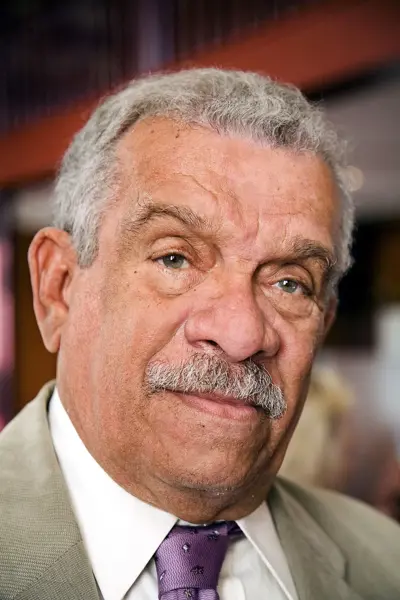
Sir Derek Alton Walcott, KCSL, OBE, OCC was a Saint Lucian poet and playwright. He received the 1992 Nobel Prize in Literature. He was the University of Alberta's first distinguished scholar in residence, where he taught undergraduate and graduate writing courses. He also served as Professor of Poetry at the University of Essex from 2010 to 2013. His works include the Homeric epic poem Omeros (1990), which many critics view "as Walcott's major achievement." In addition to winning the Nobel Prize, Walcott received many literary awards over the course of his career, including an Obie Award in 1971 for his play Dream on Monkey Mountain, a MacArthur Foundation "genius" award, a Royal Society of Literature Award, the Queen's Medal for Poetry, the inaugural OCM Bocas Prize for Caribbean Literature, the 2011 T. S. Eliot Prize for his book of poetry White Egrets and the Griffin Trust For Excellence in Poetry Lifetime Recognition Award in 2015.
