John Burroughs Quotes
The God of the Puritans...was a monster too horrible to contemplate.
Burroughs, John. The Light of Day. Houghton, Mifflin and Company, 1900, p. 11.


India had become a nuclear power.


People of this era not only saw epidemics as the wrath of God, but also saw military catastrophe, invasion and raids as a punishment of God for the sins of the people of the area.

This document was issued in the form of what today would be called a press release or a white paper. Altmark was the Lutheran seat of intellectuality and this document was part of a major Lutheran initiative to propagandize against the rising science of astronomy. The Catholics did the same and both religions saw astronomy as an enemy and evil. See {612384}

This sura is interpreted by some Islamic fundamentalists as absolution for the killing of a non-Muslim by a Muslim. It was Allah who did it. In a greater sense, critics of Islam observe that many Muslims and Islamic nations have a double standard of responsibility for crimes. If the victims are Muslims, the normal standards of morality hold; but if a non-believer there can be no crime. Terrorism, torture, beheading, mass murder can all be done with a clean conscience if a Muslim takes this interpretation of this sura. Many Muslims however take an opposite point of view. These people do not have the concept of fatalism and lack of free will that others believe. There is a parallel to this problem in Judeo Christian countries although it is less common statistically. But the murder of physicians who perform abortions, and the Jewish radical fundamentalist who killed innocent Arabs at worship are examples of people who viewed themselves as instruments of God in their heinous activities.


As a slave holder himself, this was a dramatic statement. Slavery was immoral, God’s justice will not be on the white slave owners side, a slave revolt or other event could occur and change things radically. One great puzzlement of American history has been why Jefferson, who wrote so eloquently against slavery and predicted the disaster that would come. would himself keep his slaves and never free them as George Washington did. Some argue that he was so broke financially, that he could not afford to free them.

This is a good example of how religious zeal has sometimes caused rulers to really do stupid things. Rather than try and negotiate a deal with the Sultan and pay an annual tribute or other such diplomatic solution as was common at the time, he was convinced that God would make sure that the capital of the Eastern Roman Empire—a holy city would not fall to the infidel and allow all the holy relics to fall into the hands of the heathen. In reality he would not fight for the inhabitants; he would force the inhabitants to fight for him and his view of the will of God. The message was taken by the young Sultan to be a personal challenge to him and to his God. See {634805} for his response to Constantine.


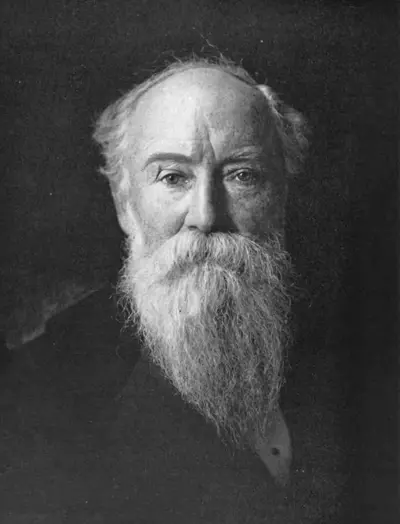
John Burroughs was an American naturalist and nature essayist, active in the U.S. conservation movement. The first of his essay collections was Wake-Robin in 1871.
