Willem Bentinck van Rhoon Quotes
The foundation of all government is the trust reposed by the people in their governors. At present that confidence is entirely extinguished. Complaints are universal and all the complaints fall upon the Prince .… The nation sees that the Prince did not make proper use of the power given to him. Those persons who almost brought down the state are still in office; they and their allies are well received by the Prince, some continue in the same improper manner as in the days of the earlier anarchy.
He addressed the Prince in the Royal 3rd person “the Prince” instead of saying “You”, the 2nd more familiar person. “Stadtholder” meant Chief Executive and Ruler. Bentinck was the Stadtholder of a Province. Prince William was Stadtholder of all of Holland. Bentinck was one of the few politicians who could and would be so candid with the Stadtholder whose cronies and friends were aristocrats who had much damaged the state and were very unpopular. William did not act and died shortly thereafter. The House of Orange and the Orangists, despite strong English support, were turned out in the Dutch Revolution.
Count Willem Bentinck van Rhoon, 1704–1774, Dutch nobleman and politician, Stadtholder (governor) of the province of Friesland in the Dutch Republic, Orangist Advisor to William IV, Advice to the Stadtholder Prince William IV of Orange, 1749
Sourced by: Eigen's Political and Historical Quotations

Trump often used the phrase "Drain the swamp" in his campaigning to mean get ride of the establishment figures who had, for the most part, dominated politics, for decades. When he was elected, he had to appoint a cabinet, but when he did so, it was almost exclusivly made up of people who had been a part of the political and corporate establishment -- the swamp.


Harry Hopkins was the special assistant to President Franklin Delano Roosevelt through the two great American crises, the Great Depression and World War II. Although he was a social worker with not a shred of political experience, Hopkins was originally selected by the President to operate the national relief program in the midst of the Great Depression. Soon he had spent more money than any human being in history without a taint of scandal. He had never been elected nor was he even ratified by the Senate. He also paid virtually no attention to members of Congress as he became the most successful manager in American Government history. Soon he became FDR’s most important aid. Then he and his wife actually moved into the White House and lived there with the Roosevelts and was a favorite of not only FDR but Eleanor Roosevelt as well. When WWII began the leading military and diplomatic leaders advised the President not to provide military aid to England or Russia believing that these countries could not hold out and the weapons would fall into German hands and be used against American soldiers. Roosevelt sent Hopkins to Europe to assess the military situation despite the fact that he had never had a single day of military experience. When his war advice contradicted that of the leading generals and admirals, many people were scandalized, especially when FDR took Hopkin’s advice above that of the generals and diplomats. Massive assistance was sent to those countries and indeed both were able to hold out just as Hopkins had predicted. No one in American politics before or since had that much influence or power. Most historians see that particular phenomenon as a unique combination of two extraordinary men at an extraordinary time and virtually impossible to replicate.

The members of the Irish Parliament at that time were an almost permanent group. Their constituents, were uneducated, ignorant, and often dependent on the member and in fear of retribution if he were not elected. Like any legislative body of members or almost certain reelection, many of the members were corrupt and unaccountable.


Samuel Langhorne Clemens, 1835-1910


The irony of this quotation is that he is the architect and controller of the Russian system that he is criticizing.


The National Assembly at the time was the legislative branch, the executive branch, and the judicial branch all at the same time. “Intrigue” referred to a panoply of questionable behaviors including bribes, promises of jobs, appointments, threats of slander, personal destruction and other corrupt practices.

While that is certainly true and has been borne out by history, the same thing can be said of democratic rulers and even many democratic politicians of lower rank. Yes men abound and not politicians not only want them but arguably need them in order to maintain the assurance and positivity that most voters associate with good leadership.

She was at the time the European Commissioner for Competition


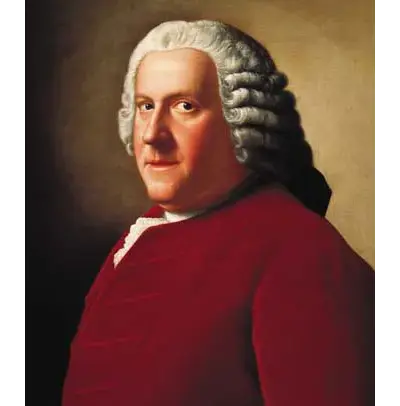
Willem, Count Bentinck, Lord of Rhoon and Pendrecht was a Dutch nobleman and politician, and the eldest son from the second marriage of William Bentinck, 1st Earl of Portland. He was created Count Bentinck (Graf Bentinck) of the Holy Roman Empire in 1732. Bentinck played a leading role in the Orangist revolution of 1747 in the Netherlands.
