William O. Douglas Quotes
The fact that there is a five-to-four decision usually means that there is at hand a five-to-four problem. Judges are not perverse; they look for unanimity, not disagreement.
William O. Douglas, 1898-1980, U.S. Supreme Court Justice, Chairman, Security & Exchange Commission, We the Judges, Doubleday, 1956
Sourced by: Eigen's Political and Historical Quotations


Islam was not very strong at this point and the followers of Muhammad were relatively few and Medina area contained Arab Non-Believers, Jews as well as the new Muslims. Muhammad drew up this document and got the non Muslims to agree to it. What is fascinating is that they bought into the idea that Muhammad would be the judge and final arbitrator of all disputes that were not resolved locally. The non Muslims agreed to this because Muhammad had been judging disputes for several years for those who would submit their cases to them. In a time of inconsistency, corruption, capriciousness and arbitrariness, Muhammad had developed a remarkable reputation for fairness, consistency, objectivity, and complete honesty. He could not be bought as most judges were at the time. He simply had demonstrated that he was the best man for the job.


The Barbary Pirates had an incredible extortion racket going in the Mediterranean. If nations would pay them an annual sum each year, they would not attack and seize merchant ships of that country and sell the ships and goods while holding the sailors for ransom. See {640845} ,{640846} & {640848}


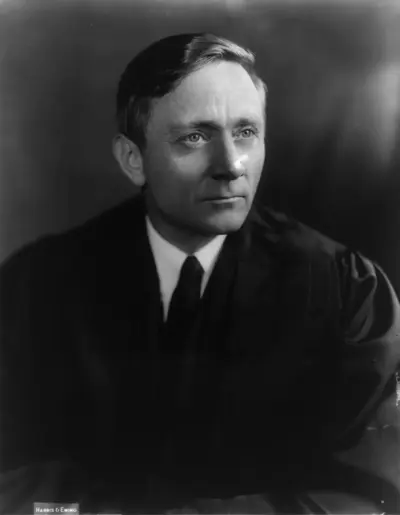
William Orville Douglas was an American jurist and politician who served as an associate justice of the Supreme Court of the United States. Nominated by President Franklin D. Roosevelt, Douglas was confirmed at the age of 40, one of the youngest justices appointed to the court. His term, lasting 36 years and 211 days (1939–75), is the longest in the history of the Supreme Court. In 1975, Time magazine called Douglas "the most doctrinaire and committed civil libertarian ever to sit on the court."
