Alexis de Tocqueville Quotes
The debates of that great assembly are frequently vague and perplexed, seeming to be dragged rather than to march, to the intended goal. Something of this sort must, I think, always happen in public democratic assemblies.
Alexis de Tocqueville, 1805-1859, French Foreign Minister & Writer, Democracy in America, Volume II, 1840
Sourced by: Eigen's Political and Historical Quotations


Declaration of Humanity. Printed in Japanese Newspapers. Contrast this with the previous Japanese political leadership tradition as {43746}

Meiji the Great. “Public Opinion” had the same meaning for the Japanese of this time as modern Western democracies perceive it with one exception. The public did not include all; it included only landlords— who owned land and had peasants on it. However, even asking them was an incredible step forward. The Emperor even sent formal written surveys to the landlords and in that sense, Japanese methodology of ascertaining public opinion was far ahead of the West. These reforms were opposed by the nobility and later the military, and by the 1930s there was no semblance of democracy left in Japan.


The House Rules Committee had evolved into a very powerful committee which controlled the debate rules of every piece of legislation that came before the House. This Congress—the worst in American History—passed fewer bills than any other. Those that ever got out of the Rules Committee had Rules that prohibited the minority from even offering amendments.


This was the classic, historical argument the Fascists made to justify their take over of democratic societies; the argument made by every military junta that illegally seized power; by Julius Caesar when he took control of Rome.


Originally it was published in Boston under the name “A Columbian Patriot.” The “principles to which she referred were the principles set out in our Constitution of 1787.
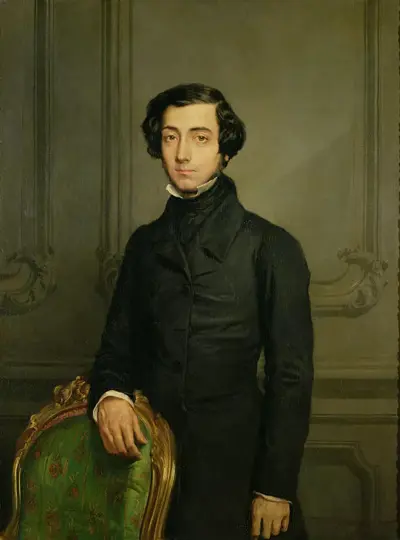
Alexis Charles Henri Clérel, comte de Tocqueville, colloquially known as Tocqueville (/ˈtɒkvɪl, ˈtoʊk-/), was a French aristocrat, diplomat, political scientist, political philosopher and historian. He is best known for his works Democracy in America (appearing in two volumes, 1835 and 1840) and The Old Regime and the Revolution (1856). In both, he analysed the improved living standards and social conditions of individuals as well as their relationship to the market and state in Western societies. Democracy in America was published after Tocqueville's travels in the United States and is today considered an early work of sociology and political science.
