Hugo Chavez Quotes
The Constitution will be reformed in accordance with our revolution.
This president served his terms as allowed by the Constitution but then moved to change the constitution so that he could be the dictator as perpetual president. The purpose of constitutions is to limit and control the day to day political process and processes of reform. This stands the purpose of a constitution on its head. Modern totalitarian states almost all have constitutions. However where they differ from democracies is that the dictatorships ignore their constitutions, constantly suspend them in “emergencies” or change them at will to serve the interests of the ruling authorities. See {622125} for a Supreme Court Justice’s view of this kind of situation.
Hugo Chavez, 1954-2013, President of Venezuela, BBC World Radio, November 31, 2006
Sourced by: Eigen's Political and Historical Quotations

A Bill of Rights has to be enforced and guaranteed by an independent judiciary in order to mean anything.i In many states, the constitution is suspended for an “emergency” when the ruler finds the constitution inconvenient. Or it is changed to suit the immediate political desires. See {633401} .


1st Baron Verulam

He was even critical of Musselini for trying to maintain soimne fo the old conservative order. This quotation became of interest when in the 2017 hyperpolerized Donald Trump, one of Trumes mosot senior aides, Steve Bannion, who generally argued for radically changing most of the political rules and practices in America was discovered to have been an admirer of some of Evola's views.


There are some conservatives who accused Brennan of altering the Constitution from the bench by his opinions. However, there is an unending debate as to how the constitutional interpreters should deal with concepts and reality that did not exist at the time of the Constitutional Convention and were unconcieved of. Some justices like Brennan believe that the principles of the Constitution should be extended and extrapolated to modernity. Others believe that in the absen?ce of specific language even Supreme Court just should not try and extrapolate. Both are reputable views and as time and technology march ahead, the issue is joined more frequently. For example, the Founding Fathers did not conceive of atomic weapons. But they insisted that Americans have the right to bear arms. An atomic bomb is a type of arm—a weapon of war and defense. Does an individual American have the right to have his own atomic bomb?


Huckabee, a fundamentalist Christian Minister in addition to being a politician, had been very tolerant of other religions and their rights. However, on the abortion question he seemed to be calling for a Constitutional amendment to make abortion illegal. The likelihood of passing such a Constitutional Amendment given the supermajority requirement was very low given the national division on this polarizing issue. A very careful reading of the candidate’s statement shows that he never literally advocated an amendment. He just stated that is would be easier to change the Constitution than to change the world of God which to believers was immutable. Thus his statement was true, yet some interpreted it as a very clever way of making a moral statement without committing to a course of action that would deny women the right to make decisions over the use and risks to their own bodies, souls, and lives.

Although there are many historical and political thinkers who do not agree that upheavals are inevitable or desirable in America, Vann Woodward and many others follow the school of American thought led by Thomas Jefferson and others of the founding fathers. With the exception of the Civil War most of the American upheavals, though painful to many losing privilege and power have not been massively bloody and have been mostly political.


The French Revolution with the rise of Napoleon was a classic example. The American Revolution was an exception.


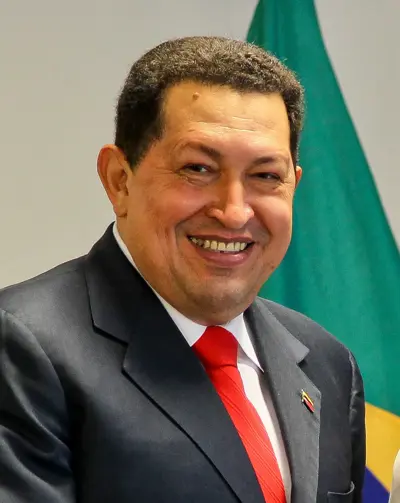
- Born: July 28, 1954
- Died: March 5, 2013
- Nationality: Venezuelan
- Profession: Politician
Hugo Rafael Chávez Frías was a Venezuelan politician who was president of Venezuela from 1999 until his death in 2013, except for a brief period in April 2002. Chávez was also leader of the Fifth Republic Movement political party from its foundation in 1997 until 2007, when it merged with several other parties to form the United Socialist Party of Venezuela (PSUV), which he led until 2012.
