Joseph Smith Jr. Quotes
The Constitution should contain a provision that every officer of the Government who should neglect or refuse to extend the protection guaranteed in the Constitution should be subject to capital punishment; and then the president of the United States would not say, "Your cause is just, but I can do nothing for you."
Smith, Joseph. History of the Church of Jesus Christ of Latter-day Saints. Vol. 6, Deseret News, 1912, p. 57.


In 1643 the Massachusetts Bay Colony wanted to dominate the region. Miantonomi, the Narragansett Indian Chief had a large well organized tribe who while friendly with the English were very independent. The Mohegan Indians, close allies of the colonists captured Miantonomi and turned him over to the Colony. Governor Winthrop’s actions have always been a disgrace to the justice of the Colony. Winthrop then turned him over to his traditional enemy, Chief Uncas, of the Mohawk to remove him from the boundaries of the Puritan Colony and then tomahawk Miantonomi to death. Winthrop actually sent several Puritan Englishmen to “see the execution for our more full satisfaction.” Among Miantonomi’s “evil” deeds was the fact that he gave Roger Williams, a religious and political dissenter from Winthrop’s Colony and religious “heretic”, a large tract of land (Providence) for his colony.

In 1786, many veterans of the American Revolution had still not yet been paid the promised wages for their military service by the new national government. The States however had imposed taxes on farms to fund the new state governments and pay the state’s war debts mostly to rich merchants. Many veterans could not pay the taxes and some were thrown into debtors’ prison, and others had their farms foreclosed. Led by Daniel Shays, a small group of Massachusetts men conducted a mini rebellion by closing local court houses and tried to take over the local state armory. The Governor put down the rebellion by force and the rebels were jailed. Adams, the the former governor, recommended the death penalty and several of the rebels were executed. Thomas Jefferson disagreed. See {604839} for his famous quotation on the subject. This was one of the early crises of the new country and it was handled very poorly and unfairly.


Samuel Langhorne Clemens, 1835-1910. Even when we have political freedom of speech, there are often social consequences to exercising that freedom. See {630273} .

In the aftermath of 9-11, a few government agencies violated the law and civil rights of a number of “Muslims” and/or “Middle Eastern looking” individuals and held them incommunicado with no charges and no warrants. The rationale of those agencies is that they “could not take a chance as lives were at stake. In most major wars in America, there has been an “overreaction” by some officials.

Abdul Rahman, Afghan citizen, had converted from Islam to Christianity 16 years before. Conversion from Islam is a capital crime under Sharia Law which was the law of Afghanistan even after the Taliban had been overthrown. He was jailed and threatened with death. Statements like this and others made directly to the government persuaded the Afghan politicians to go against their mullahs who demanded the death penalty as is proscribed by Islamic Law—Sharia. The judges tried to get Rahman to recant and he would not (see {589518}). So they finally decided that he must be mentally insane and therefore could not be tried, and the problem was solved that way.

To the pro-slavery politician, abolition was an abdication of government to fulfill it’s 3 major responsibilities. Slaves were private property and government had to safeguard the owner’s right to own that property. Slave owners had always been free in America to hold slaves, and abolition impinged on that freedom. And the slavery advocates knew better than the abolitionists how cruelly the slaves had been treated. They reasoned—that if anyone had treated them that way, they would if they could take revenge and kill the slave owners. Therefore, abolition threatened the lives of Southern citizens. Of course, Brown and his fellow slave-owners did not consider the fact that they had interfered with the right of the slave to own property, they denied him freedom, and in many cases killed slaves as examples or out of neglect. Their “logic” was that slaves were not citizens and therefor were not entitled to these protection.


In the face of terror bombings, Britain passed some anti-terror laws which also somewhat infringed on civil rights, liberty and privacy.

Trump was then President Elect who already had a large staff helping him fomake the transition. He still went off on his own with this state,ment whiich runs afoul of the Constitution which he would soon sware to defend when he took the Oath of Office. The Supreme Court had unequivocably ruled that the burning of the flag was a type of political speech and as such could not be curtailed or punished by the government. The penalty of a loss of citizenship was another constitutional thicket. In addition. in the hisoty of the country,, it had never been used as a punishment for breaking domestic law.


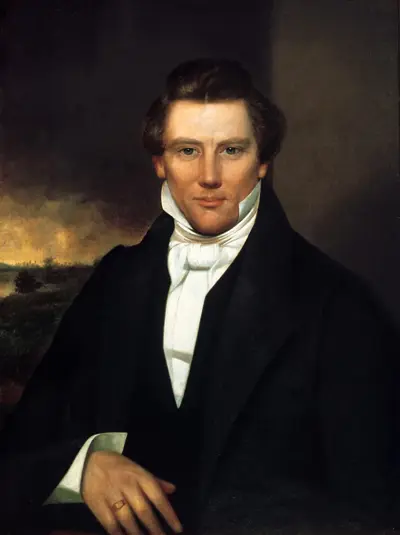
Joseph Smith, Jr. was an American religious leader and founder of Mormonism and the Latter Day Saint movement. When he was twenty-four, Smith published the Book of Mormon. By the time of his death fourteen years later, he had attracted tens of thousands of followers and founded a religious culture that continues to the present.
