Dorothy Denning Quotes
The concern is over what will happen as strong encryption becomes commonplace with all digital communications and stored data. Right now the use of encryption isn't all that widespread, but that state of affairs is expected to change rapidly.
Denning, Dorothy E. Interview. Educom Review, vol. 34, no. 3, 1999.


The law enforcement and the intelligence agencies have been claiming for a number of years that etrong encryption (encryption which no one can crack with existing technology) if used by the general public would really hinder law enforcement and espionage efforts. The Federal government actually obtained a court order prohibiting the inventor of the stong encryption frm sharing the equations and techniques with anyone--as blatant an infringement to the right of free speech as there was been. The order was ignored and although the government tried to intimidate the developer by threatening him with prison. He refused to comply and the government finally dropeed the case, as the courts would almost certainly find such a jailing unconstitutional. However, although they tell the courts that there is a clear and present danger if terrorists use encryption, no one had, up to that time, found a single case where being able to decypher the encryption would have prevented an attack.


He had developed a mathematical algorithm for a computer encryption that would take years to break even for the most powerful supercomputers. The U. S. Government tried to prevent him from publishing the technique and formula, but he went ahead anyway. They then tried to accuse him of violating an Arms Export Control Act for allowing people in other countries to see it, but there were no legal grounds for indictment. The strong encryption method, PGP, can be used with almost any PC and internet transmission of files.


The FBI had obtained a court order requiring apple to write software that could hack into a person's iPhone. Apple, with most other hi-tech companies in support, filed a motion with the court opposing the order. The FBI shortly thereafter withdrew its request for the order saying that they had found other solutions, when they had originally told the court that there were no other solutions.
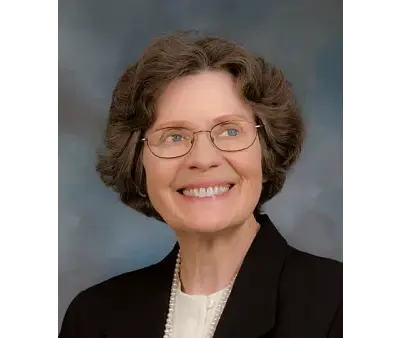
Dorothy Elizabeth Denning, born August 12, 1945, is a US-American information security researcher known for lattice-based access control (LBAC), intrusion detection systems (IDS), and other cyber security innovations. She published four books and over 200 articles. Inducted into the National Cyber Security Hall of Fame in 2012, she is now Emeritus Distinguished Professor of Defense Analysis, Naval Postgraduate School.
