Henry Campbell-Bannerman Quotes
...the concentration of human beings in towns...is contrary to nature, and...this abnormal existence is bound to issue in suffering, deterioration, and gradual destruction to the mass of the population...countless thousands of our fellow-men, and still a larger number of children...are starved of air and space and sunshine. ...This view of city life, which is gradually coming home to the heart and understanding and the conscience of our people, is so terrible that it cannot be put away. What is all our wealth and learning and the fine flower of our civilization and our Constitution and our political theories – what are all these but dust and ashes, if the men and women, on whose labour the whole social fabric is maintained, are doomed to live and die in darkness and misery in the recesses of our great cities? We may undertake expeditions on behalf of oppressed tribes and races, we may conduct foreign missions, we may sympathize with the cause of unfortunate nationalities; but it is our own people, surely, who have the first claim upon us...the air must be purified...the sunshine must be allowed to stream in, the water and the food must be kept pure and unadulterated, the streets light and clean...the measure of your success in bringing these things to pass will be the measure of the arresting of the terrible powers of race degeneration which is going on in the countless sunless streets.
Urbanization has often alarmed the power structure. Given the harsher form of urban poverty compared with rural poverty, it was hard for politicians to understand the draw of the cities. They did not then understand the value and importance of greater opportunity, greater privacy and anonymity, more choice and more de facto freedom. Bannerman and many others would have been totally surprised that in the second decade of the 21st century, more than half the people in the entire world were living in cities and suburbs.
Henry Campbell-Bannerman, 1836-1908, British Prime Minister and Minister of War (Liberal), Speech. Belmont, January 25, 1907
Sourced by: Eigen's Political and Historical Quotations

Western populists were terribly suspicious of the cities. Note that the migration to cities was noticeable enough to be considered a problem. Better roads and the railroads made relocation easier.


Many ministers and others looked at the migration of the rural population to the cities as a national issue of morality and decay. They fought a losing battle. See {631005} for his puzzlement and its details.

In most of American history, population has moved from the rural areas of the country to the cities. After WWII there was a movement from the rural areas to the suburbs as well as the cuties and movement from the cities to the suburbs. The assumption that the schools were not as good in the cities would be challenged by many and in the next 30 years, there was much educational reform in the cities and they had the best schools in the country. Until the movement to the suburbs, the educational attainment of city children was (and is today) much better than that of rural children. Dickernan and many others could not understand the movement to the cities because there was vice in the cities. They rarely considered the social, cultural and economic advantages of cities and generally assumed that people—especially children—could not resist the temptation of vice in the immediate vicinity.


Roosevelt thought like Jefferson that it was not desirable to have a large proportion of the population residing in cities, and one of the more successful aspects of the New Deal with the improvement of conditions in rural America. Despite that, the trend to the cities was inexorable in America with the rest of the world following that trend.

Nixon was the last Republican President in the 20th century to favor public transportation and mass transit. By the beginning of the 21st century, there were almost no Republican member of Congress would was interested in public transportation and most opposed all efforts at such.


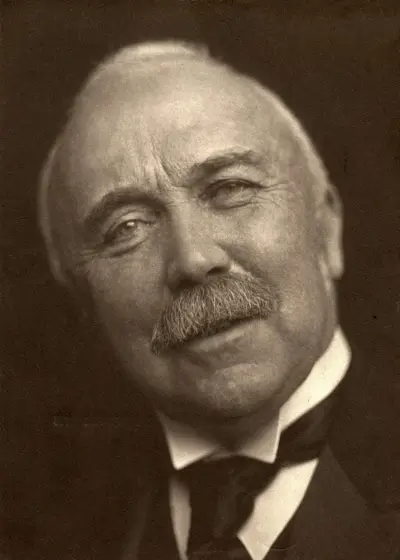
Sir Henry Campbell-Bannerman GCB PC was Prime Minister of the United Kingdom from 1905 to 1908 and Leader of the Liberal Party from 1899 to 1908. He also served as Secretary of State for War twice, in the Cabinets of Gladstone and Rosebery. He was the first First Lord of the Treasury to be officially called "Prime Minister", the term only coming into official usage five days after he took office. He also remains the only person to date to hold the positions of Prime Minister and Father of the House at the same time.
