Empress Dowager Cixi Quotes
The Chinese move very slowly. Our customs are so fixed that it takes much time to change them.
Cixi, 1835–1908, Empress Dowager of China, Statement to American Sarah Conger, ~1902
Sourced by: Eigen's Political and Historical Quotations


There are a few modern progressive conservatives who believe this point of view, but most generally resist change.


Samuel Langhorne Clemens, 1835-1910


Shulamith Bath Shmuel Ben Ari Feuerstein. Feminist opinion is divided among those, like Firestone who want to eliminate all cultural gender distinctions and those who advocate a cultural gender distinction, but one that is equal and respectful.


This is the ultimate extreme of conservatism which literally means to conserve what is. Salisbury argues that even if you truly believe that the status quo is bad, you should keep it as the risk of change and unexpected consequence is so great that it is not worth the risk. Interestingly, this is the same mode of thinking which created the command in the Koran for Muslims to live with a terrible Caliph or ruler (unless he is a blasphemer or heretic) rather than risk the instability of regime change. See {590195} and {593076} as examples.


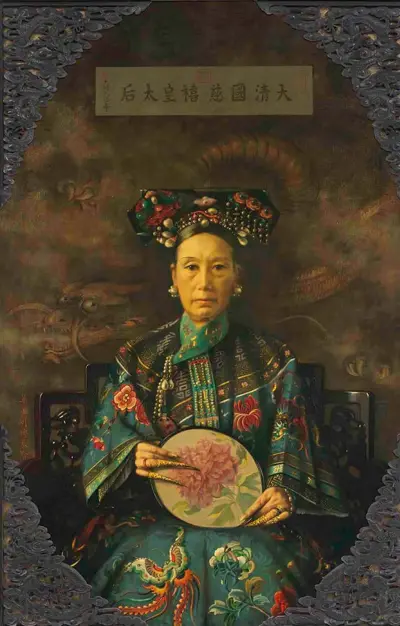
Empress Dowager Cixi was a Chinese empress dowager and regent who was the de facto supreme ruler of China in the late Qing dynasty for 47 years, from 1861 until her death in 1908. Of the Manchu Yehe Nara clan, she was elected as a concubine of the Xianfeng Emperor in her adolescence and gave birth to a son, Zaichun, in 1856. After the Xianfeng Emperor's death in 1861, the young boy became the Tongzhi Emperor, and she became the Empress Dowager. Cixi ousted a group of regents appointed by the late emperor and assumed regency, which she shared with Empress Dowager Ci'an. Cixi then consolidated control over the dynasty when she installed her nephew as the Guangxu Emperor at the death of the Tongzhi Emperor in 1875, contrary to the traditional rules of succession of the Qing dynasty that had ruled China since 1644.
