Theodore Parker Quotes
The Catholic clergy are on the side of slavery. They find it is the dominant power, and pay court thereto that they may rise by its help. They love slavery itself; it is an institution thoroughly congenial to them, consistent with the first principles of their Church …
The Roman Catholic Church in America had a very difficult problem with slavery. Catholics were themselves a minoirty, hated and distrusted by many Protestants. In most of the country, the distrusr was based on their large immigrant population, but in the South Catholic theology was hated and the Vatican and Pope were particular targets. The Catholic Clergy generally did not want to take sides in the most contentious issue in America since its inception. The Southern Catholic Clergy did not have that option as in the South, anyone who was not a supporter of slavery was an "enemy of the community and subject to all kinds of violence." Some Southern priests were willing to take the personal risk but did not want to put their followers at risk. In a strange consequence, Catholics--especially Irish Catholics--fought on both sides of the Civil War and often against each other. While it was not an exemplary moral behavior for the Church, there were difficult pressures on Catholic leaders. Further, most of the lowest and most difficult, undesirable jobs were filled by Catholics and most Catholic laymen so and end to slavery as the start of pitting the Catholics against the Blacks. So there was not a groundswell for abolition in most Catholic parishes even in the North.
Theodore Parker, 1810-1860, Clergyman & Abolitionist, Sermon, “Rights on Man in America,” 1854
Sourced by: Eigen's Political and Historical Quotations


This statement was made long after slavery had been abolished and Jim Crow was on the rise in the South.
Parker and other escaped slaves in Christiana fought off slave catchers and killed the slave owner leading them. Charged with treason, he escaped to Canada with his family and lived there the rest of his life. While not a polished writer, after he himself had escaped and went to Christiana and leaned to read and write. He wrote this narrative of his life as a slave—one of the few written works we have from slaves.

The mental conditioning and brainwashing that was forced upon slaves in the American Chattel Slavery system was a major factor in the poor intellectual, analytical, emotional, and egocentric and moral development of Black slaves.

She was a great and powerful orator using a combination of preaching, story telling, and rhetoric.

Parker and other escaped slaves in Christiana fought off slave catchers and killed the slave owner leading them. Charged with treason, he escaped to Canada with his family and lived there the rest of his life. While not a polished writer, after he himself had escaped and went to Christiana and leaned to read and write. He wrote this narrative of his life as a slave—one of the few written works we have from slaves.

Jamaica, then part of the British Empire which had outlawed slavery, was quite racially integrated with negroes and mulattos in civil positions such as magistrate. When the ship landed, the slave, John Anderson, was kept locked below deck since if he ran off and reached shore, the Jamaican authorities would have declared him a free man. The presence of the captive negro slave leaked out and a group of Jamaicans boarded the ship uninvited and forcibly removed Anderson, He was taken before a Jamaican magistrate who declared him a free person. The ship’s captain demanded that the authorities return the American private property which had been stolen from an American ship by a “mob”. Harrison, the US Counsel complained to the Jamaican Governor of the “Insult” to the American Flag that had taken place and demanded redress. In both efforts, the original decision of the magistrate was supported and Anderson was a free man. Harrison, an ardent Southerner from Virginia was apoplectic and asked the State Department to make this case a major issue in relations with London. His description of the public opinion then in Jamaica was classic. His racial bias was even supplemented by a virulent anti-Semitism because not only had Jewish Jamaican merchants supported abolition of slavery but some had intermarried with Negroes who had converted to Judaism.

This was the first of the famous Lincoln-Douglas Debates. The men were contesting for the U. S. Senate. Douglas won the election.

The President often referred to this statement as an example of his wife’s acumen. She had been born to a Southern plantation and inherited the land and the slaves. Her view, and his, were typical of the Southern point of view in early America.

This quotation illustrates how the racist South defeated the objectives of the Civil War and Reconstruction by the institution of Jim Crowe laws and so called “states’ rights”. It would take more than another half century for the Yankees and the vast majority of the non-Southern Americans decided that the Southerners could no longer “do as they pleased” with fellow human beings. It is hard to believe for us today that an entire section of our country could actually believe in the morality of the South but that is the tragic history of race relations in America.

Referring to Montgomery Alabama in 1950.


Under the previous Republican administrations, virulent and overt racists were not generally appointed especially as they were generally then Democrats. However, when Woodrow Wilson was elected president, he not only appointed many overt racists but he himself may have been one of the most racist Presidents every to inhabit the white House. He fired almost all the Blacks who held positions in the Federal government.
[This was the first Abolition appeal written by a Black Man. It was published in Boston and despite the fact that it was very critical of whites, was very popular going through two more printings within the next two years.]

This law required the treatment of Blacks as whites were then treated with respect to indentured servitude—a limit of 10 years after which the person would be free. However, this law was poorly enforced. The “General Court” was the name for the legislature of the Rhode Island colony.


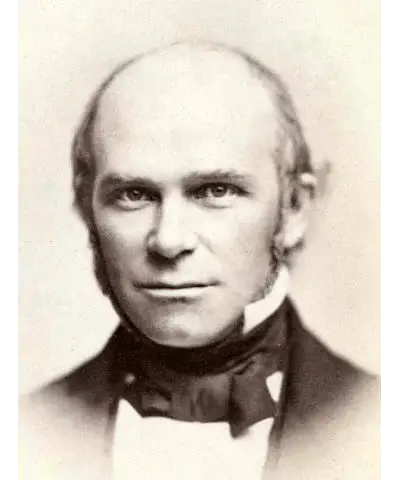
Theodore Parker was an American transcendentalist and reforming minister of the Unitarian church. A reformer and abolitionist, his words and popular quotations would later inspire speeches by Abraham Lincoln and Martin Luther King Jr.
