Homer S. Cummings Quotes
The case was always a difficult one, but the form the opinions took would seem to indicate such a marked cleavage in the Supreme Court that it may be, and probably is, a forecast of what we may expect with reference to almost any form of social legislation that Congress may enact. Apparently there are at least four justices who are against any attempt to use the power of the federal government for bettering general conditions, except within the narrowest limitations. This is a terrific handicap and brings up again, rather acutely, matters we have previously discussed, including a proposed constitutional amendment .
of the Railroad Retirement Act. to expand the Supreme Court to fifteen justices
Homer S. Cummings, 1870-1956, Mayor of Stamford, CT (Democrat), U. S. Attorney General, Memo to President Franklin D. Roosevelt, May 1935
Sourced by: Eigen's Political and Historical Quotations


In reference to the Supreme Court "packing" legislation proposed by President Roosevelt, Prof. Cushman wrote:


The Roosevelt administration had stemmed the tide of Hoover’s Great Depression but the nation had not yet recovered. The New Deal measures, most of which would be considered fundamental to good government 50 years later was being constantly thwarted by a Supreme Court with a strong arch conservative majority headed by James McReynolds, a virulent, overt, anti-Semitic racist, who hated FDR—see {616652} and {585241}. The situation was to many like that which existed before the Civil War when the Court rendered the Dred Scott decision that so harmed the nation. Frankfurter, not then a Supreme Court Justice, urged Roosevelt to do something lest the American Public lose all respect for the Court and our Constitutional system and have the nation harmed by not allowing reforms like child labor laws to go through. The court actually ruled by a narrow majority that the government could not pass laws making it illegal for 11 year old children to work in coal mines or factories. FDR attempted to add more justices turning the majority into a majority—“packing the Supreme Court”, but that politically backfired. Some of the reforms never went through while others needed Constitutional Amendments like the end to Prohibition.


Then Clarence Thomas replaced Thurgood Marshall on the Supreme Court, there appeared to be a majority of the court that would overturn Roe v. Wade and a woman’s right to an abortion. However it was an election year and the Chief Justice, a Republican, was concerned that if Roe was overturned the electorate might take it out on the Republicans, whose Solicitor Generals had fought to overturn Roe, at the polls. He therefore postponed the hearing of a Pennsylvania case, and then tried to postpone it again till after the election. Blackmun’s memo caused a majority of the court to vote to hear the case with no additional delay. Ironically, by a single vote, Roe was upheld.

In addition, most state and local corrupt officials are detected, and prosecuted by Federal law enforcement officials as local and sometimes state corruption involves the local and state law enforcement officials as well as others so local authorities often turn a blind eye towards corruption.
What was to become the 14th Amendment was being discussed. Several of the most radical Republicans drafted language that would allow Congress to make any law regarding life, liberty or property, so that they could be sure that the States would not make their laws in a discriminatory manner. However, Hotchkiss and the majority wanted to be sure the laws were not discriminatory but they didn’t want Congress to have the power to make any law regarding life, liberty and property for every state. The current version of the 14th Amendment just prohibited discrimination in laws, not empowering the Federal Government to override the state governments in most important areas.


From this quotation, {615902} and {615901} it is clear that the framers of the Constitution intended the treaty making powers to be shared by the President and the Senate. In practice, in modern times treaties are usually initially negotiated by diplomats under the supervision of the President and the Senate gets to concur or not in the ratification process. However, there have been a number of treaty failures including the League of Nations where the lack of coordination has resulted in a situation where the Senate had to accept or reject something which the President had negotiated and the Senate rejected the treaty.


The then Assistant Attorney General worked with the President to pack the Supreme Court, but advised against the appointment of a popular Senator who might be too conservative.

The Chief Justice at the time was an ultra-conservative judge, who together with his 8 colleagues—all conservative—had blocked much of the democratic and progressive legislation that the Congress had passed. FDR had a much different legal and philosophical view of the Constitution than the Chief Justice, and the court would declare much of his New Deal legislation, passed in the emergency of the Great Depression, unconstitutional. Almost all of those “unconstitutional” things were years later passed again and this time a more modern court found they were Constitutional.

Theodore Roosevelt and Taft were both strong advocates of an expanded Federal government much to the distress of the conservative wing of their Republican party. However, they also had strong public support for expanding the size and scope of the national government. It was not the left wing socialists who expanded the Federal government. It was the Republican administrations with a Republican control of both houses of Congress.
The 10th Amendment reserves powers to the states and limits the Federal Government’s powers. However, there are other clauses in the Constitution, like the Commerce Clause (Article I Section 8), which gives the Federal Government authority and control over Interstate Commerce, which in modern society permeates almost all activities of State government, The result is that the federal government / state government power division has been a political issue and not really a constitutional one. At the time Republicans advocated a literal 10th Amendment interpretation and the Democrats favored a stronger Federal Government with more authority and power as stated by the Commerce Clause. Roy had been trying to explain to his fellow Republican strategists that it is hard to attract Blacks to the remainder to the Republican Platform as long as they were insensitive to what the 10th Amendment meant to Blacks historically. The Southern states cited the 10th Amendment more than any other part of the constitution to justify their right to maintain slavery. It was the Federal Government that ended slavery. Under the rubric of the 10th Amendment the South managed to get rid of most of the racial civil rights Reconstruction reforms that were imposed by the Federal Government on the Southern States. And it was the 19th Amendment that was the authority for Segregation for 100 years. And the terrorism of the Klu Klux Klan and the lynching and terror imposed on Blacks by Southern states claiming the 10th Amendment right to do so. Finally, it was the Federal Government, overriding the 10th Amendment with the Commerce Clause and other parts of the Constitution that passed and enforced the Civil Rights Act, the Voting Rights Act, Desegregation and the end to Lynching and other Southern State-Sponsored terrorism. Blacks will not any time soon accede to having the 10th Amendment literal view of the role of government and if Republicans insist on that there would continue to be very few Black Republicans,
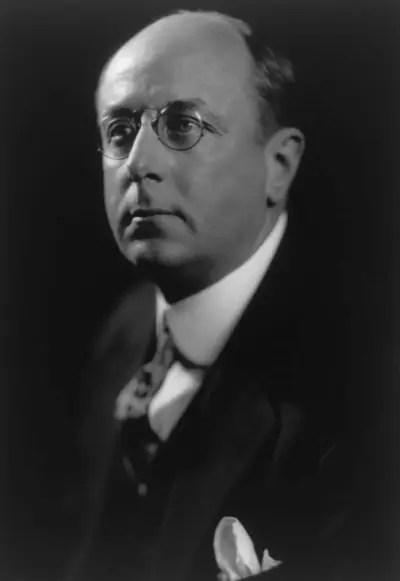
Homer Stille Cummings was a U.S. lawyer and political figure who was United States Attorney General from 1933 to 1939. He also was elected mayor of Stamford, Connecticut, three times before founding the legal firm of Cummings & Lockwood in 1909. He later served as chairman of Democratic National Committee between 1919 and 1920.
