Henry Laurens Quotes
The Arms of the United States of America having been blessed in the present Campaign with remarkable Success, Congress have Resolved to recommend that one day, Thursday the 18th December next be Set apart to be observed by all Inhabitants throughout these States for a General thanksgiving to Almighty God…
He was communicating the Resolution of the Continental Congress.
Henry Laurens, 1724-1792, President of the Continental Congress, South Carolina Merchant & Politician, Letter to the States, November 1, 1777
Sourced by: Eigen's Political and Historical Quotations

What is particularly interesting about this quotation is the date. As late as 1932, a governor of a major state, was declaring a State holiday for a particular religion, and in his official capacity was recommending fasting and paryer within a Christian context. Although the Proclamation violated the First Amendment, at the time few people would make the effort to go to court to challenge what had been a long tradition in America of declaring Christian Holidays official and the keeping of the Sabbath with criminal penalties for those who did not. However, it took time, effort and money to challenge these practices in court, and the majority community did not treat those people well socially who challenged custom as unconstitutional even when the courts agreed and restrained the practice. Even into the 21st century there were still a few legal battles about prayer in schools and promulgating Biblical passages in public buildings. From the late 1800s to the latter part of the 20th century, it was the Democrats who attracted most religious Americans while the Republicans were the party who advocated a non-traditional but Constitutional approach to religion. See {623322}


The Continental Army needed everything from uniforms to muskets, mules to food. The British were mobilizing in force. General Washington was pleading for material assistance. Some members of Congress thought the spiritual was as, if not more important. See {583803} for other Continental Congress spiritual contributions to the war effort.

July 4 is celebrated today, but the exact day has varied.


Madison was a deist, but was firm that religion was to be an individual matter and not an area in which the state ought be involced.

The House was debating on the peace treaty with the United States. Pitt, then was Chancellor of the Exchequer. He knew the government would lose the vote and he would have to resign.

The first Native American to become a General Officer. Appointed by President Grant in 1869. When Lee arrived there were many Black troops and he mistook General Parker for a Negro but then apologized saying that “I am glad to see one real American here.” This was Parker’s reply.

The Pilgrims at Plymouth celebrated the first American Thanksgiving in 1621. George Washington had declared November 26, 1789 a day of thanksgiving. During the raging Civil War, President Lincoln had fixed the last Thursday of November to be a “Day of Thanksgiving”. Geary was following precedent and helping to make a tradition. However, there were those at the time who objected to the last sentence of the quotation as being overly sectarian and violating the separation of church and state doctrine. See


Maryland had not yet ratified, and was not to do so until March 1, 1781, yet Jay operationalized the new nation with this letter.

Shabbat is the Hebrew word for the Sabbath. In Israel there is conflict between ultra-orthodox Jews on the one side and secular Jews, Christians and Arabs on the other regarding store openings and closings on Saturday—the Jewish Sabbath. The orthodox want the power of the state to force stores to close on the Sabbath. The others want the freedom of the individual to either close or open a store, to shop or not to shop, to keep Friday as the Sabbath as the Muslims do, Saturday as the Jews and a few Christian sects do, or Sunday as most Christians do. This used to be a major issue in the United States. Local communities all had what were called “Blue Laws” that controlled the Sabbath. The courts however found these unconstitutional and these issues have disappeared as political issues in America.


This historical quote is important because it shows that there was great dissention about the celebrating of Christmas even among different Christian sects. Traditionally, the celebration of Christmas in a government building or school would have offended half the Christian population. In early America, Christmas celebration was legally prohibited in some states and required in others. This was one of the reasons that the Founding Fathers wrote the First Amendment into the Constitution. In modern times, some critics accuse the requirements that Christmas celebration in public facilities as being anti-Christian. But the problem has been with America since before the Constitution.

Ingersoll was considered to be the greatest orator and political thinker of his day, but his overt atheistic views curtailed his elected political career.

This is the first state to make Christmas a legal holiday. The reason that this is important is when there were many legal battles of public schools and municipalities celebrating Christmas and exhibiting crèches and Christmas trees, several of the proponents argued the doctrine of originalism—namely that we should not declare unconstitutional anything that was common and accepted at the time of the Constitution’s writing, debating, and ratification. They argued that the First Amendment was not intended to cover celebrations of Christmas as the founding fathers would not have made unconstitutional that which was common. While the principle of originalism has advocates and critics, the originalism theory does not hold regarding Christmas because Christmas was not commonly celebrated in early America. See {629845} and {629843} for more evidence on this point.

This is a quotation which shows that Christmas was not a Christian Holiday that was commonly celebrated in early America. The reason that this is important is when there were many legal battles of public schools and municipalities celebrating Christmas and exhibiting crèches and Christmas trees, several of the proponents argued the doctrine of originalism—namely that we should not declare unconstitutional anything that was common and accepted at the time of the Constitution’s writing, debating, and ratification. They argued that the First Amendment was not intended to cover celebrations of Christmas as the founding fathers would not have made unconstitutional that which was common. While the principle of originalism has advocates and critics, the originalism theory does not hold regarding Christmas because Christmas was not commonly celebrated in early America. In no state was Christmas a holiday, and there were jurisdictions that had actually outlawed the celebration of Christmas which was associated with Catholics and not all of them. See {629845} for another.


The Ottoman Turks had conquered much of Europe, as far even as Vienna. Ataturk although an incredible reformer for democracy, religious freedom, and gender equality, felt that critical to Turkey’s independence and ability of engage in radical reform depended on the World and European and Turkish perception that Turkey was the equal of any European nation and had ruled most at one point.
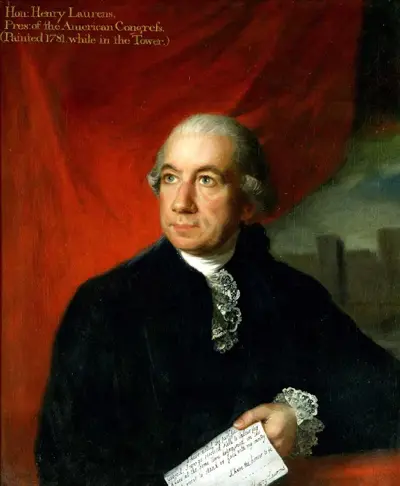
Henry Laurens was an American merchant, slave trader, and rice planter from South Carolina who became a political leader during the Revolutionary War. A delegate to the Second Continental Congress, Laurens succeeded John Hancock as President of the Congress. He was a signatory to the Articles of Confederation and President of the Continental Congress when the Articles were passed on November 15, 1777.
